Estimated reading time:9 minutes, 30 seconds
Everyone has a story. Long-time Whittington nurse Ann Green, part of the Windrush generation, shares her thoughts about celebration cakes, Jeremy Corbyn, living in N19 and coping with racism. This interview was first published in Elthorne Pride: lasting legacy. Interview by Nicola Baird. Photos by Kimi Gill & Nicola Baird

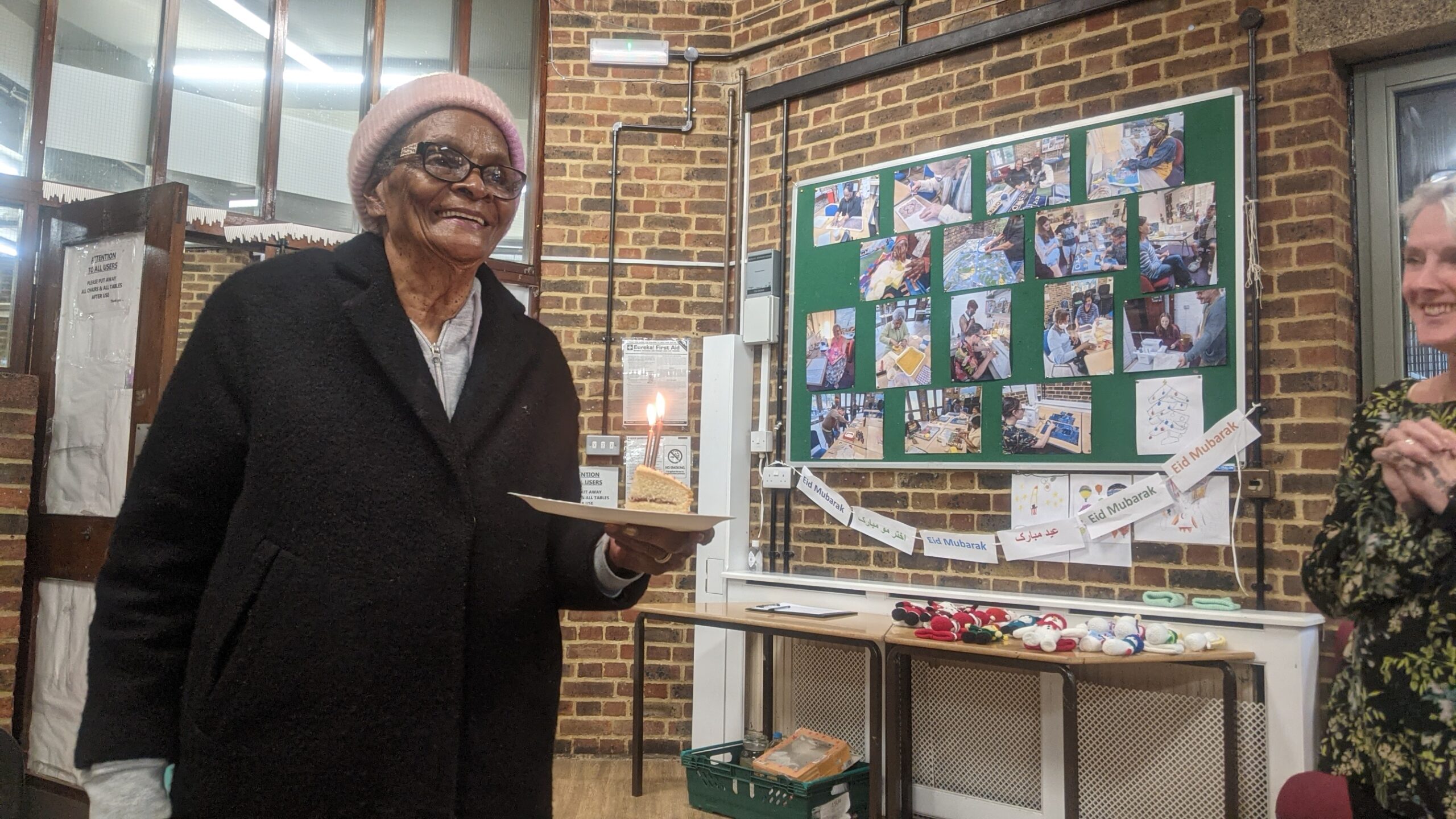
Ann Green enjoying her birthday at an Elthorne Pride event in Caxton House (c) NB for Islington Faces
“My two sisters came to England before me, the older one in 1952, the younger in 1955,” says Ann Green, almost hidden behind the pile of knitting she’s recently completed. There are at least eight beautifully knitted squares which will become part of Elthorne Pride’s contribution to blankets for patients at the Whittington’s new dementia garden. She’s also brought in five tiny, knitted hats for the baby ICU (intensive care unit) at the Whittington.
FOLLOW Islington Faces, a new interview is published approx once a fortnight.
Two of Ann’s brothers also came over. One worked for London Transport as inspector on the overground train that went through King’s Cross, Finsbury Park and Wood Green. Sadly, both died within six months of each other, during the corona pandemic.
Before Ann can start explaining about her own Windrush journey made in 1959, which was delayed for a couple of years because her father fell ill, so she stayed in Grenada to care for him, a cake is brought out to celebrate Ann’s 89th birthday.
“It’s my third cake,” she says with some pride as the coffee group she regularly meets with at Caxton House sing Happy Birthday. It’s good to have friends and family ready to celebrate, and for Ann that includes her adult twin daughters, six grandchildren and four great grands as well as her Archway neighbourhood.
====================

Screengrab of Ann Green’s interview in the booklet Elthorne Pride Lasting Legacy about community life in Elthorne, N19. The book was published by Elthorne Pride (2024)
==============
Ann Green’s best memories from Islington
- Getting around on the 271 bus, although it’s been cancelled now.
- Newington Green: I love to go with my grandchildren on birthdays and special occasions to the restaurants. We’re a big group and in Newington Green we can be comfortable.
- Jeremy Corbyn: I won’t hear a word against him. I’m very grateful to Jeremy for what he did for my housing. My twins had to squeeze into the box rom. The bunk bed was behind the door, so they had to go in sideways. I was paying rent and wanted a mutual exchange, but the council said, ‘Your children can sleep in the sitting room!” I went to see Jeremy and told him my problem. I said, ‘I’m going to throw myself off the bridge’ and he said, ‘leave it to me’. One night I was in my bed sleeping and I heard a rattle. He’d dropped a key for me to view a property. I know it was him because I looked out of the window and saw his back! I turned the key into number 16 the next day thanks to him. I will never give that key up.
- Holidays: after Carnival (the Notting Hill Carnival) I liked going from Islington on the coach to the seaside to sit down and relax. Since 1995 we’ve been going on trips to Great Yarmouth, Margate and Weston-Super-Mare.
==========================
Ann Green is a very skilled knitter and has created many items for Whittington Hospital’s mother and baby unit, and for patients with dementia (c) NB for islington faces
Nursing life
For 45 years Ann worked as a nurse for the NHS. She started at Wadhurst, Sussex then went to Friern Barnet and finally moved to the Whittington. “I got up early, at 4am, for 25 years to go to the Whittington,” she says.
“If you like what you are doing, you don’t bother about obstacles. If I like my job, it doesn’t matter what you do to me because I will do my job to pay the bills,” she says hinting at some of the challenges the people who were invited from the Caribbean faced (see box about Windrush at the bottom of this post).
“I don’t think we were treated right. Britain applied for help – they invited us – and the Commonwealth came to help. We had the passport before we left. When my big sister first came, she was living in Ladbroke Grove. She had to work and send money back for me. I had to pay for a passport and to sit papers. In London, in those days, you had to be strong. I was tough and I didn’t take no nonsense from anyone. When I was in Finchley , doing the same job as the others, the Irish nurses were doing the writing and we – the Black ones – measured the urine.”
Ann moved to Islington because “this area was quiet”.
“At the Whittington I changed a lot of things. By standing up for myself, it helped a lot of people. You could see the injustice.”
She then points out how her husband, from Barbados, who worked on transport, “didn’t have it so good. He was beaten up by the Teddy Boys on the way home. You learnt when things happen to you that some learn from it and think differently. This did happen to me, I thought that’s your daily wage, either you put up or die. People who understand this you can count on the fingers of one hand; the others turn a blind eye,” she says with quiet rage because she’s lived at the tough end of a challenging life, and all because she answered the Mother Country’s invitation for Commonwealth young people to help launch the NHS.
Ann has a very sharp intellect. Although long retired from nursing, she’s still shocked to recall the way women would tell her that, “They couldn’t stomach taking care
of their own mother’s food and hygiene needs after a hospital stay.” Whoever you are, when you’re retired or infirm it’s a conversation that we must all have with our families she advises.
Talking with Ann offers a whole range of life lessons but in particular, the sort of grit she and all the Windrush generation had to find to make that big move from the Caribbean to a less than welcoming 1950s London.
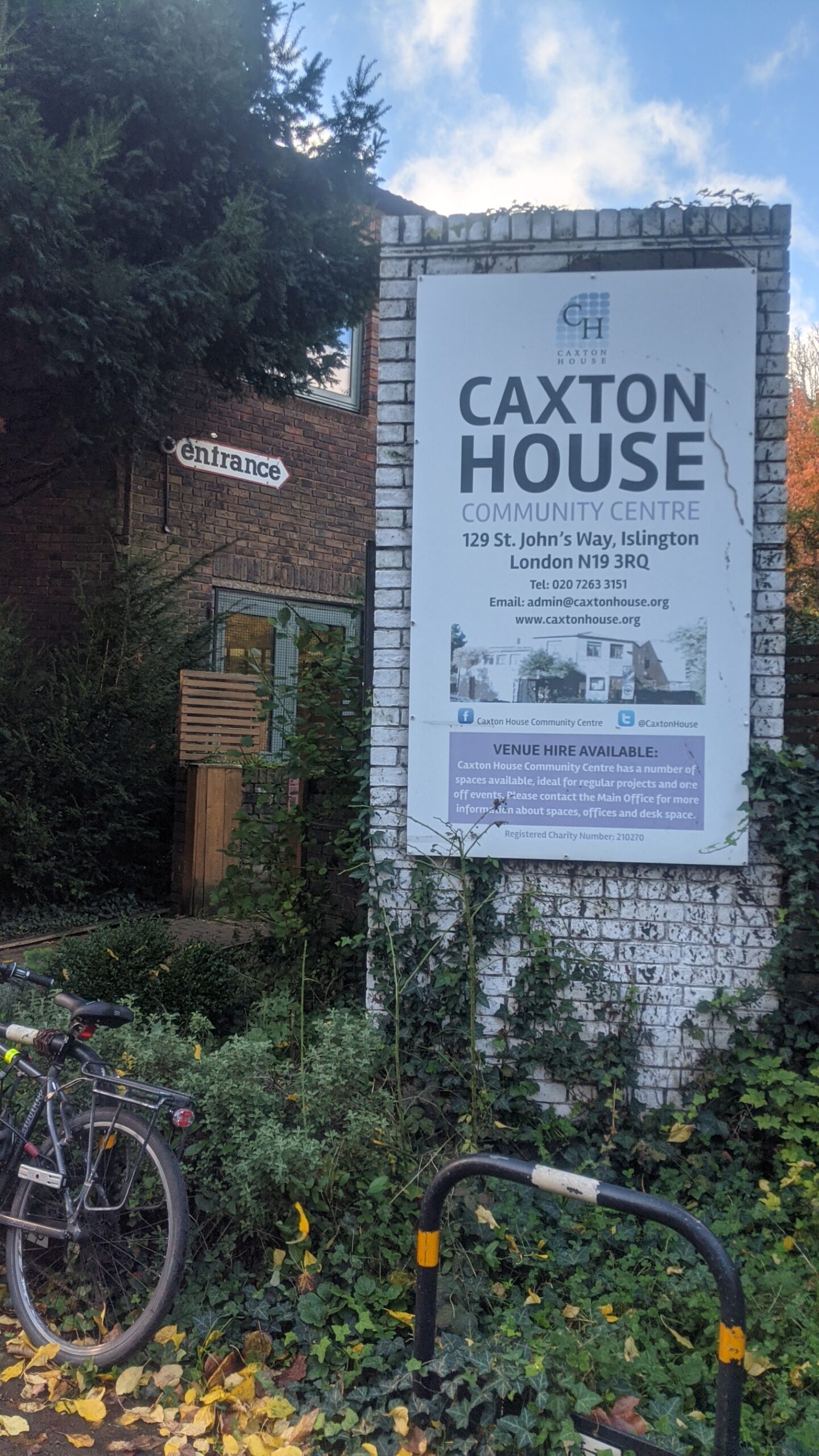
Caxton House is often used as a meeting point for Elthorne Pride events including coffee afternoons and the popular Friday night bingo. (c) NB for islington faces
More info
- Elthorne Pride is a charitable community group which runs events, coffee afternoons, bingo, food bank and advice surgeries from Caxton House, 129 St John’s Way, N19.
- It also has an extensive after school and holiday programme for young people. Email info@elthornepride.co.uk or see the website www.elthornepride.co.uk
==============
What do you know about the Windrush generation?
- One boat, many people
The Empire Windrush was the first of many boats which arrived on 22 June 1948 in Essex with hundreds of passengers from the Caribbean (including Jamaica, Bermuda, Trinidad and British Guiana). The passengers had been invited to fill the Mother Country’s workforce shortages after WW2 (1939-45), in particular for nursing and transport.
- NHS
The NHS was created on 5 July 1948, two weeks after the Windrush docked. It is the world’s first free universal health care.
- Nurses needed
Around 40,000 nurses and midwives from around the Commonwealth came to the UK between 1948-1973 to help the NHS who couldn’t find enough staff. “Without their contribution the NHS would have collapsed.”
- Windrush generation
The Windrush generation were young men and women from the Caribbean islands. Geographically this area includes Antigua & Barbuda, Bahamas, Barbados, Cuba, Dominica, Dominican Republic, Grenada, Haiti, Jamaica, Saint Kitts & Nevis, St Lucia, St Vincent & the Grenadines and Trinidad & Tobago. For some years after the Windrush’s first journey, ships would go around the islands collecting men and women who were willing to work in England. Typical jobs in the NHS were nurses, midwives, porters, orderlies, cleaners and caterers. In February 1956 London Transport began recruiting directly from Barbados.
- Islington Faces
www.IslingtonFacesBlog.com interviewed N5 local Stanley Smart talking about his Islington life which began with a 13-day journey from Trinidad to Tilbury, Essex on an Italian ship, the Ascania in 1958.
- Difficulties exposed
In 2018 it became clear that many of the Windrush generation had been treated badly as they grew older, especially those without passports. Census data from
2018 showed that about 21,000 people who moved to the UK before 1971 (often from the Caribbean) had no British passport, nor a passport from the country where they were born and could be having difficulties proving they were in the UK legally.
- Honouring Black nurses
In June 2021 Whittington Hospital commemorated the Windrush and Commonwealth NHS nurses and midwives with a special granite statue representing a nurse or midwife with baby in a collaboration with the hospital, Islington Council and Nubian Jak Community Trust. This is only
the third memorial dedicated to Black women in a public space in London. Also see the book by Jak Beula called Nursing a Nation: an anthology of African and Caribbean contributions to Britain’s health service (£29) which features two of Whittington Health’s team. You can buy this at New Beacon Books on 76 Stroud Green Road, N4.
- Thank you
The 2023 tribute from the Royal College of Nursing (RCN) included the beautiful Windrush Poem by nurse Carmel O’Boyle with the last line, “how can we thank a whole generation who sailed away to save our nation”
- Local Black author’s story
Small Island is a prize-winning novel by Andrea Levy (1956- 2019) who grew up at Twyford House on the Blackstock Estate and went to Highbury Fields school. It’s also a TV series and a play. Small Island is a brilliant book bringing to life the experience of the post WW2 generation as they try to make better lives for themselves in a very unwelcoming London. It’s been called one of the “100 novels that shaped our world” by the BBC and won the Orange Prize “Best of the Best”.
- Racism
In this interview Ann, who worked as a nurse, talks about her husband being beaten up by Teddy Boys in a racist attack. But casual or intended racist behaviour, structural racism (within organisations including the NHS) and micro-aggressions have all made life challenging for people of colour. It was the Windrush generation, and others from the Commonwealth, all with, or entitled to, British passports who faced this full-on.
=============
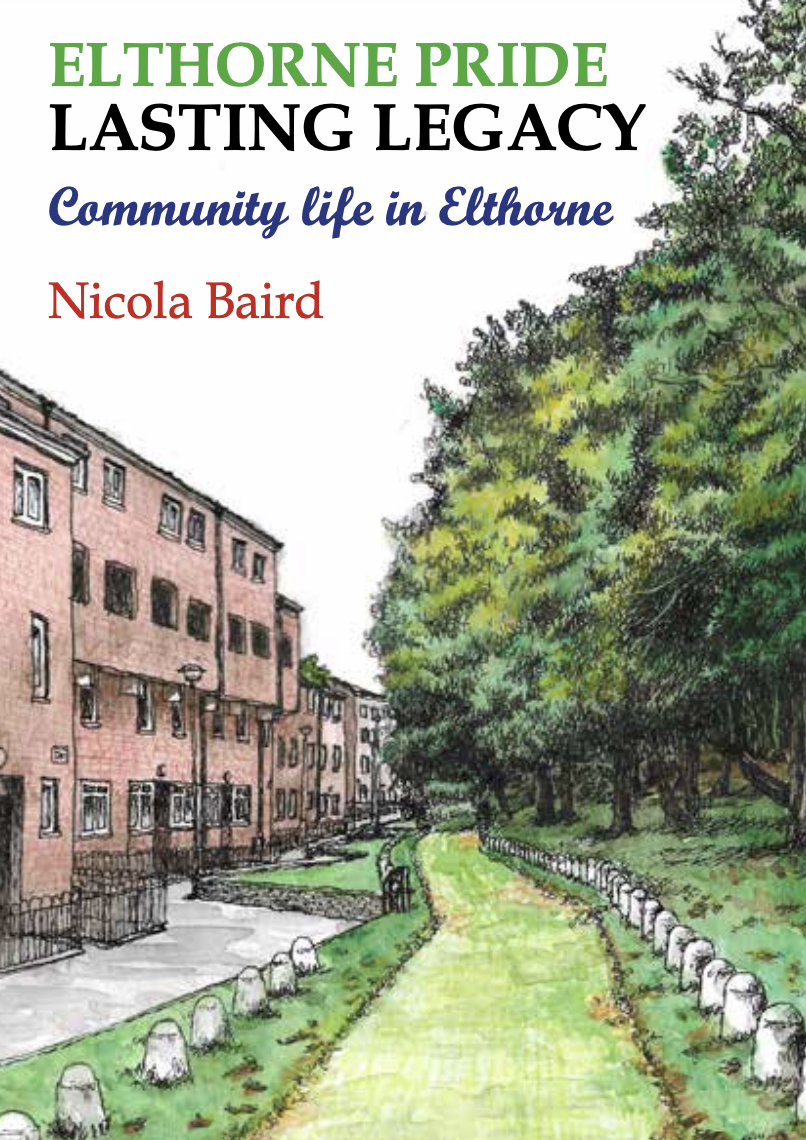
This interview was first published in ‘Elthorne Pride Lasting Legacy’.
This interview was first published in Elthorne Pride Lasting Legacy. Front cover design by Dave Mctaggart.
Over to you
If you’d like to nominate someone to be interviewed who grew up, lives or works in Islington, or suggest yourself, please let me know, via nicolabaird dot green at gmail dot com. If you enjoyed this post you might like to look at the A-Z index, or search by interviewee’s roles or Meet Islingtonians to find friends, neighbours and inspiration. Thanks for stopping by. Nicola