Estimated reading time:8 minutes, 30 seconds
Everybodyhas a story. Londoners waste over 910,000 tonnes of food a year but we don’t have to. Here’s how Pawel Rycza, Recycling & Waste Minimisation Officer at Islington Council, is helping young people make small changes to their kitchen habits – from learning to freeze eggs to reviving stale bread – that will save them money and stop so much perfectly delicious food being chucked out. Interview by Nicola Baird
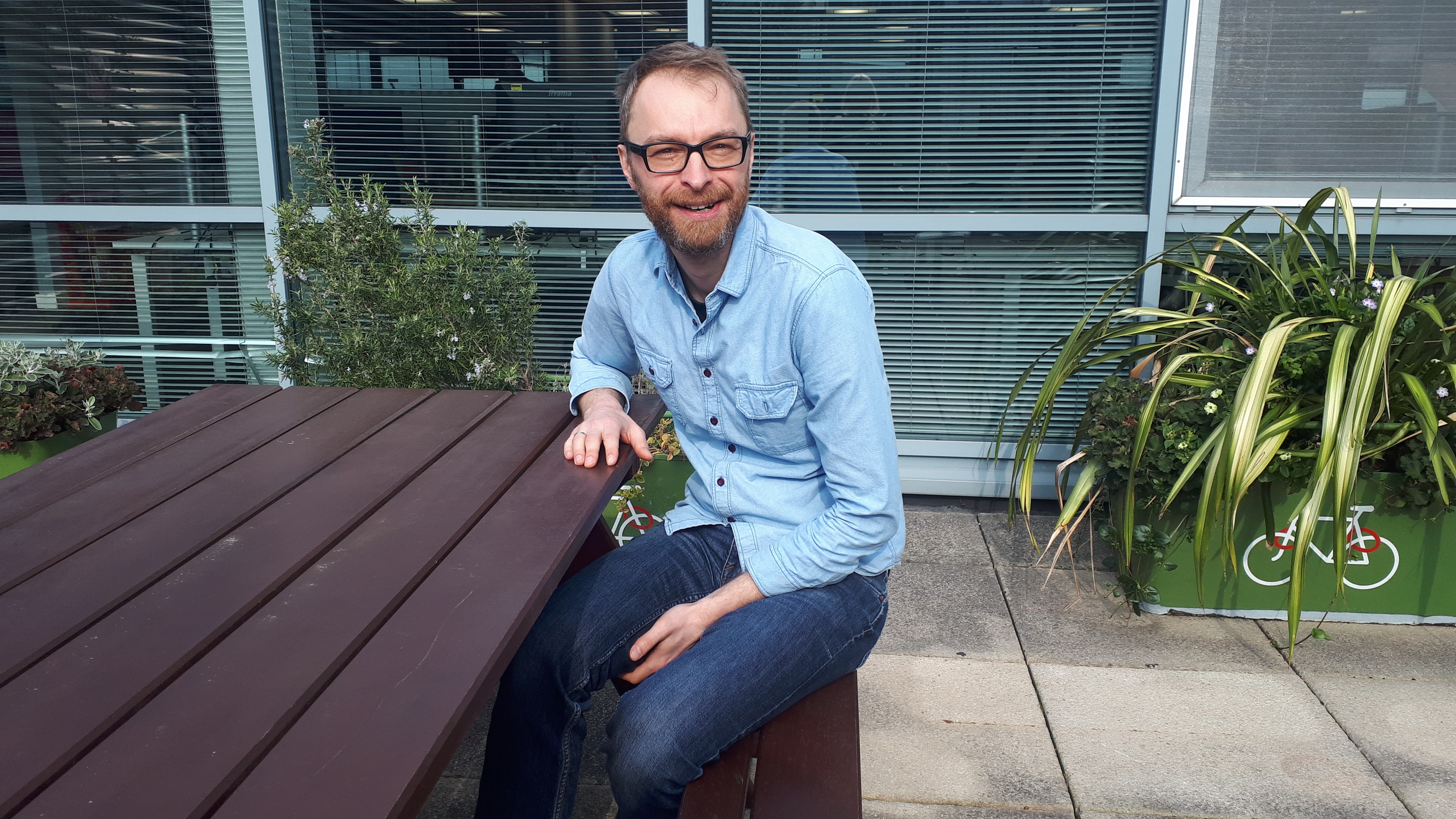
Pawel Ryczan (c) Islington Council
Polish-born Pawel Ryczan, 39, has been living in London since 2003. A skilled environmental practitioner, with a track record working on waste prevention at charities and local authorities (first Lambeth, now Islington) Pawel’s leading a pan-European project designed to help Millennials waste less food. And it’s in Islington that the real work changing mindsets is happening.
Q: Where are you based?
I’ve been working in Islington for about a year and a half. I live in Hackney.
FOLLOW ISLINGTON FACES a new interview is published every week. Please also come and see our free “Inspiring Islington” photography exhibition at Islington Museum from 5 April – 3 June 2019. And on Sat May 11 from 5.30-7pm, you can even join a canal tour around City Road Basin (near Angel). More info and how to book on www.islingtonfacesblog.com/events
Q: What’s your job?
I’m working on a food waste project for Islington that is helping people to live and work in a more sustainable way done with Groundwork London and Resource London (a partnership of WRAP and L-warb (the London Waste and Recycling board) which works to create a circular economy in London. They came up with this Trifocal project (Transforming city food habits for life), funded by the EU, and then developed the food waste campaign – Small change, big difference which I project manage. The campaign has three phases, with a learning in-between each phase. Eight London boroughs are participating including Hackney, Tower Hamlets, Bexley, Sutton, Hounslow, Merton and Lambeth – so a mix of inner and outer boroughs. Islington (like Hounslow and Sutton) is in the third phase, following that there will be a pan-London phase and the lessons and good practice will be implemented in seven European cities around Sweden, Italy, Belgium, Spain and Romania.
Islington is delivering the campaign to millennials (someone who is in between 18-34 years old). For Small change big difference, we’re using a lot of social media. We’ve had ads on a bike, the tube, bus shelters and electronic noticeboards in the council buildings and on the estates as well as traditional posters in libraries and community centres.
Q: Why Millennials?
This is a group of young people identified by the project as wasting quite a lot of food. It’s mainly because they live on their own, or in shared houses. They have busy lives, don’t spend much time at home and don’t cook that often. Islington has a massive student population which is not always captured by census, with students studying at Met University on Holloway Road and at City on St John Street. But there is also accommodation for University of the Arts at Finsbury Park, Newington Green and Holloway Road. There are also student developments on Cally road and at King’s Cross.
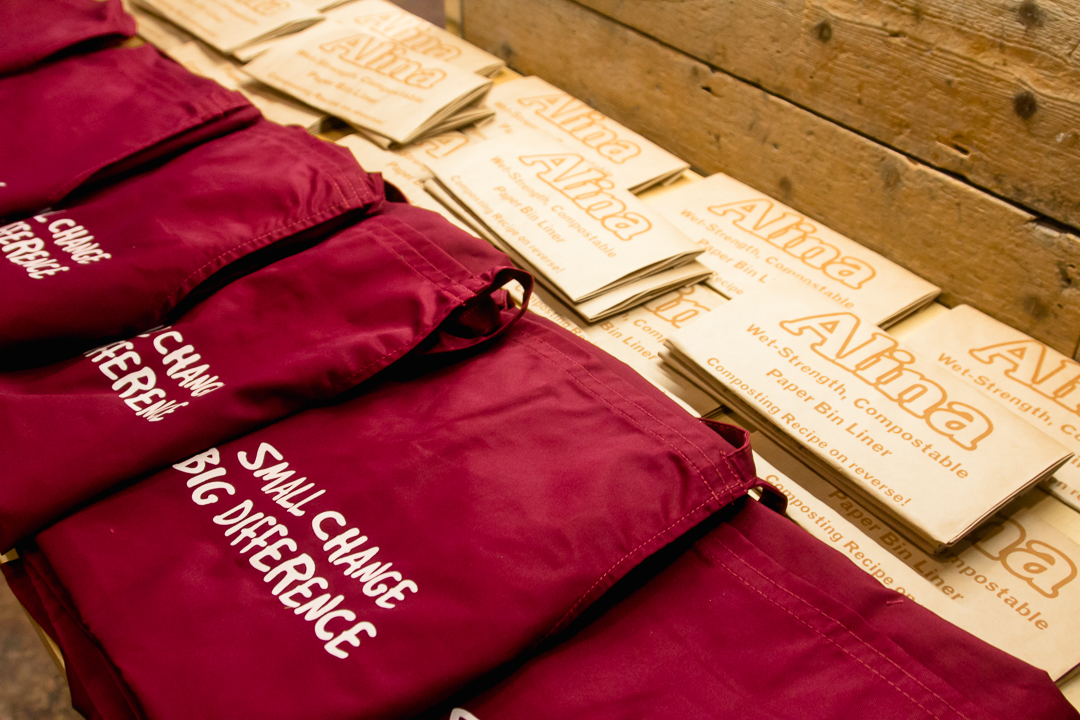
Part of the Small change big difference campaign – compostable bin bags (c) islington council
Q: What’s a quick win?
The big message is to eat less meat, even by cutting down to meat-free one day a week because livestock farming has a massive impact on the environment. UN Resources Outlook report saying that 80 per cent of diversity and 50 per cent of global greenhouse gases is linked to farming and mining. Here are some great tips for making better use of your food. As the campaign says: it’s a small change, big difference.
- Freeze half your loaf if you don’t always use it all. Pop the slices into your toaster straight from the freezer.
- Once you have opened your bagged lettuce – place it in a tub with kitchen roll to make it last longer.
- Eat from your freezer one day a week.
- Try canned veg in your cooking – it’s packed with vitamins and lasts longer.
- Did you know you can freeze eggs? Simply crack them into a bowl and either separate or whisk together.
- Take a ‘shelfie’ of your fridge before shopping to avoid doubling up on items.
- One recycled banana peel could generate enough electricity to fully charge a mobile phone twice.
- Any container can act as a caddy in your kitchen, so long as you put the food waste you collect in the correct council box or bin outside your property.
- Did you know you can recycle, bones, eggshells, fruit peelings and coffee grounds in your council food waste collection? Just put them in your caddy.
- Make healthy ice cream using frozen banana – simply slice and blend.
Q: What’s been the most fun activity?
Organising the Karma Kitchen event at Vinyl Café, Tileyard Studios, King’s Cross which was for millennials living in Islington. The focus was on highlighting the messages of small change big difference using surplus food. We collected produce from City Harvest, a charity that links surplus foods with organisations and people who could make use of it. Our chefs from Silo Brighton, run by Douglas McMaster, prepared that into a couple of dishes. Silo Brighton is a zero waste restaurant in Brighton, a city McMaster calls the “organic powerhouse of the UK”.
Check out http://www.silobrighton.com/story/ to see how a restaurant can source locally by cutting out food miles, make its own almond and oat milk and demonstrate nose-to-tail eating. When it was set up the dining room furniture is upcycled (so used again). The result is very cool, cuts out food miles and over-processing. The restaurant calls this a return to “pre-industrial eating”. Silo Brighton’s motto is reuse, reduce, share, repeat.
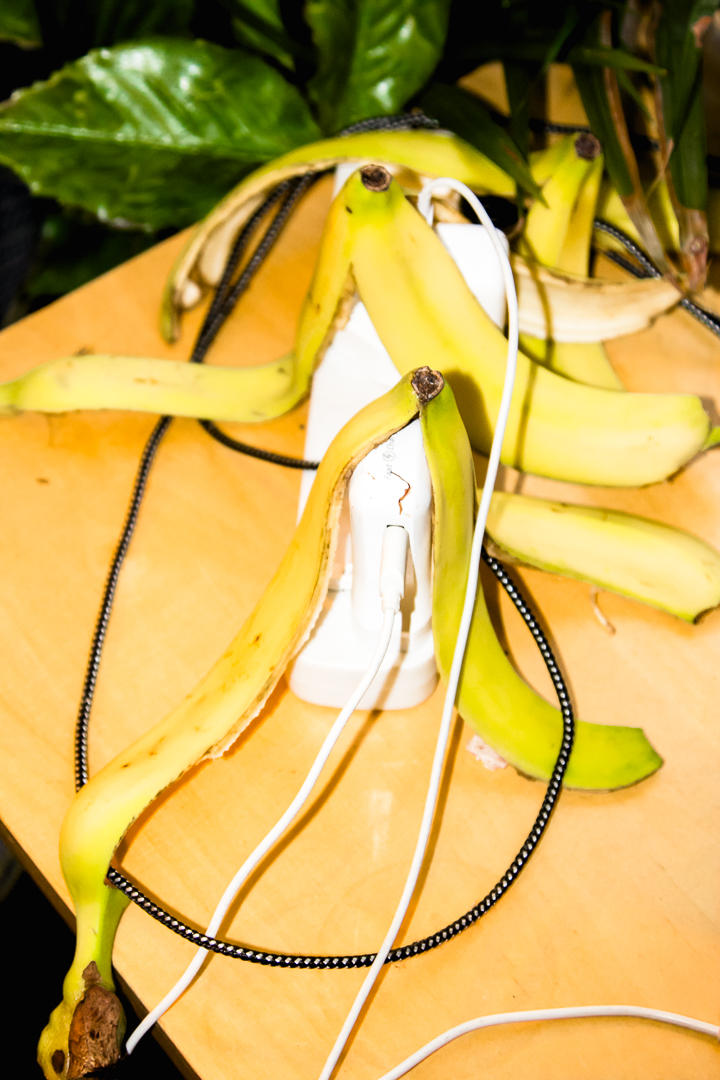
Banana phone chargers demonstrating how much energy is lost from waste food. (c) islington council
Q: What was on the menu?
There was a curry with sweet potato and lentils; two types of soup; rice and peas; apple crumble. We had a foragers’ fricasse so people could see how it was being done. There was a basket where people could drop stuff they could not use and then the chefs incorporated into the meal. We were donated lettuce, lemons, yoghurt and mangoes. The mangoes were turned into a chutney. The lemons were used for a yoghurt dip. The lettuce was chopped and made into a kimchi.
We had very good feedback on the food. There was a superb leek and potato soup. Also tomato soup with crutons (a good way to use up crusts and excess bread) which was really tasty. Curry is always good with coconut, sweet potato. The food was really extraordinary.
It wasn’t just food. We designed Karma Kitchen to be interesting and inter-active. We had some art installations commissioned for the event, and displays to show the environmental impact of food production. For example, how much water is used to produce wheat versus beef. Also displays showing why recycling is important and the energy potential of food waste – you can charge your phone from a food waste banana (see photo).
We had a DJ playing food theme tunes so people could dance. There were two speaker: Douglas McMaster from Sylo who’s done Ted talks. His restaurant doesn’t produce any waste. They have no bins! And Claudia Webbe who is on the council and the executive member for the environment. She delivered a very good speech to inspire millennials to show what we are already doing in Islington. Groundwork London delivered a simple workshop too, aiming to get people to pledge how they can change their behaviour.
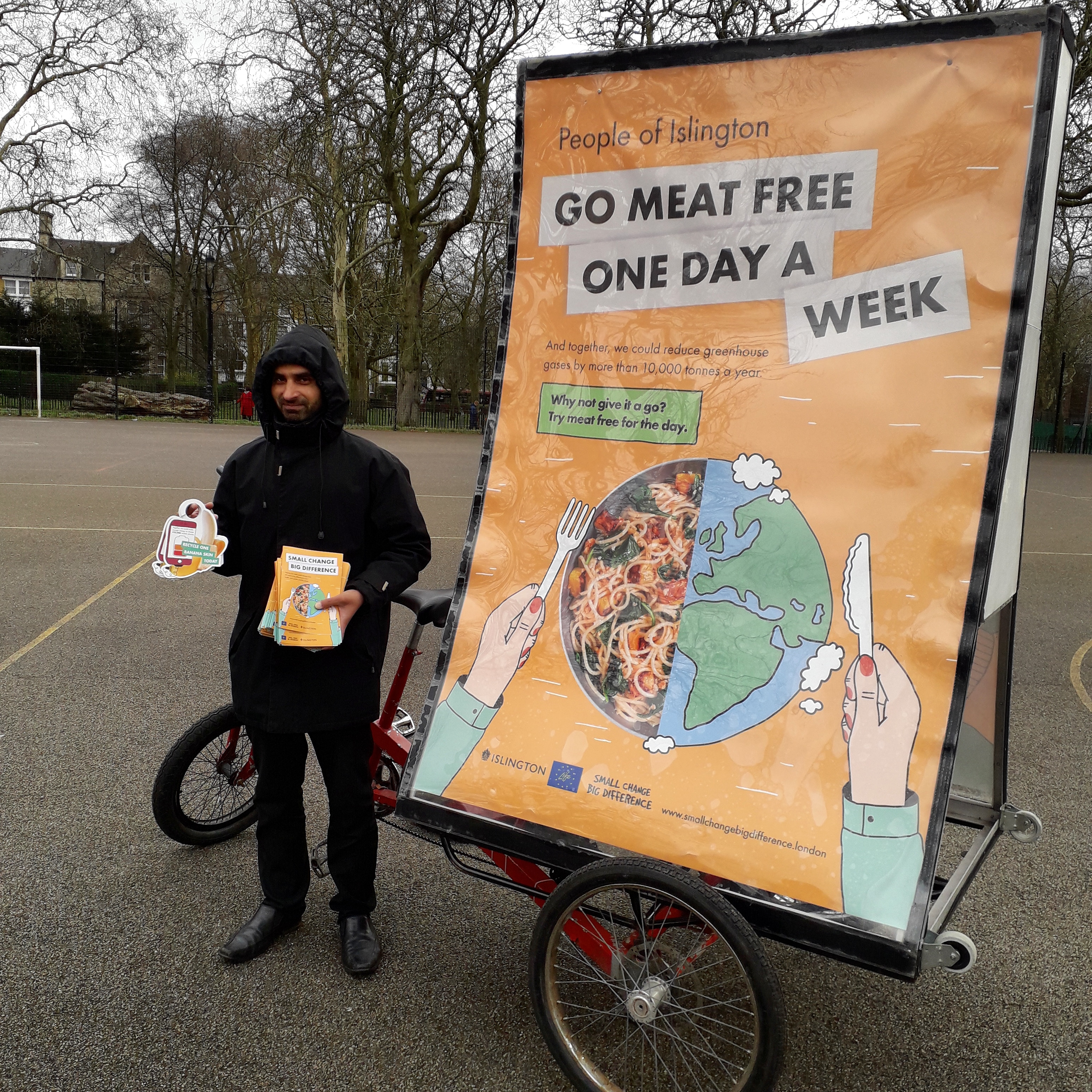
The big message is to eat less meat, even by cutting down to meat-free one day a week because livestock farming has a massive impact on the environment. (c) islington faces
Q: How will you share the Small change big difference food message?
We had about 80 people at Karma Kitchen and we were filming. We plan to proudce three short films which will feature highlights of healthy and sustainable eating, food waste prevention, and recycling what’s left.
Q: Did you learn anything new?
I revaluated my approach to a freezer. I hadn’t really used that much frozen fruits. Now I do – when berries are cheap, I buy things like blueberries and put them in the freezer where they last a very long time. They can spoil very quickly otherwise.
I’ve been working with this issue for a very long time (Pawel studied environmental protection) so I don’t waste any food. My friends know I’m a bit crazy about things like that – they expect me to be! One tip is never go shopping hungry. I look through my fridge and cupboards before I go shopping (some people recommend taking a photo). Quite often I find carrots, onions, lentils and then I google what I’ve got and see what I could make from it (eg, carrot soup, dahl, stock, stew).
I also really like seeing food growing. In Hackney there’s a zero waste garden with kale, chard, and lots of salads. It looks really beautiful. When you see the transformation of a concrete patch – see the birds coming in and flowers – it’s aesthetically amazing but also shelter for biodversity and storing carbon. It’s amazing to see the cycle.
- More info at http://smallchangebigdifference.londonincluding dates of pop up cookery classes
- Follow on twitter @smallchangefood
Over to you
If you’d like to nominate someone to be interviewed who grew up, lives or works in Islington, or suggest yourself, please let me know, via nicolabaird dot green at gmail dot com. If you enjoyed this post you might like to look at the A-Z index, or search by interviewee’s roles or Meet Islingtonians to find friends, neighbours and inspiration. Thanks for stopping by. Nicola