Estimated reading time:7 minutes, 36 seconds
Everyone has a story. If your dream is to do a PhD and become a professor, but no one in your family has ever gone to university, then meeting Michelle Obama while at EGA Secondary School, and being given a scholarship to do a Masters at Kings College London are inspiring steps on the way. Meet Farida Ahmed with a passion for blazing a trail that will inspire other young women. Interview by Nicola Baird

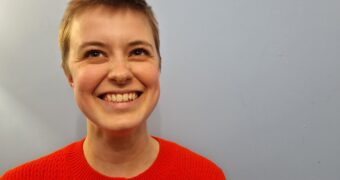
Londoner Farida Ahmed (c) FA
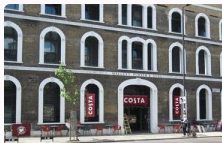
Costa Coffee close to Caledonian Road tube.
Over a latte at the Costa by Caledonian Road tube Farida Ahmed talks me through her Masters on Conflict Resolution in the Middle East. “I wanted to hone in on the Israeli-Palestine struggle as being crucial for the peace of the Middle East, but as there are 20 students, mostly international from the US and China, and I’m one of the only Muslims on the course, they look to me.”
Farida points out that she doesn’t want to have to explain or apologise – something she’s written movingly about for the Huffington Post, but “being a young Muslim, growing up as an Islington girl I felt forced to be more vocal. So I make sure I know a lot more and read more and can be the voice of reason.” And Farida really means this – during the interview she tells me: “There’s nothing worse than letting other people voice your opinion for you,” while on her Huff Post profile she quotes Malcolm X’s famous quip to remind us all that ‘If you don’t stand up for something, you’ll fall for anything’.
>FOLLOW ISLINGTON FACES by email: a new interview is published every week.
Education is her passion. But it’s not been an easy ride. For starters, Farida is the first in her family to ever go to university and the eldest of five children. It may be the 21st century, but some might say that Bangladeshi culture still values married women far above their education. “My mum was married at 16 and had me at 17. She couldn’t read or write English properly and she didn’t get a job until my fourth sibling was born – she’s now a midday supervisor at my primary school,” says Farida who is a loving critic of her parents. To some extent she’s taken on many responsibilities for her siblings, including going to parents’ evenings. But she’s proud of her mum and conscious of feeling that “my mum wanted to live her life through me – everything she didn’t get to do, she wanted me to do through education and more.”
School days
EGA is rated outstanding now, but Farida did her GCSEs there before the rebuild. Her parents picked the school because it was all girls. She then went to Woodhouse College for Year 12 and Year 13, which has an enviable reputation for pushing its sixth formers to do better than their best.
“Going to Woodhouse did tonnes for my self-esteem. I suddenly felt intelligent. If I’m honest, I don’t think I’d have ever gone to university if it wasn’t for my A level teachers saying that a B was not good enough,” says Farida who ended up with A* A* A and is now determined to “set a standard for her sisters and young cousins. I’d like to have an impact on loads of young people in different ways, so for me my success is in enabling other people’s success. Every step of the way I want to carry them on my shoulder, so my dream is to do a PhD, teach and then become a university lecturer.” That’s why this student is so busy: she also writes in the Huffington Post, tutors at the Tuition Network and has just landed a job at her old sixth form as Year 12’s pastoral head of year.
===================================

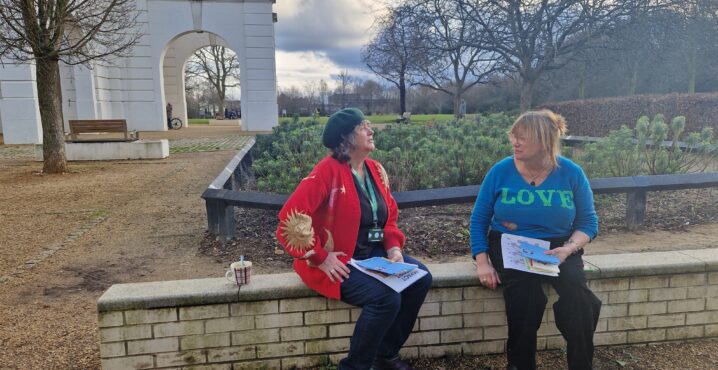
A side street just off Chapel Market was where Farida Ahmed used to revise. (c) islington faces
================================
Identity
“I decided to go to university but was working three jobs (at the Disney Store, nannying and tutoring). I’ve got friends who say the structures just aren’t in place for them to do a degree or Masters, they have to go on and work. But if I was a man it would have been ten times easier. For example at home certain things are expected of women, but not men. I can’t work ridiculous hours in the library and come home when I want. And Bangladeshi families appreciate anything sons do a lot more than daughters do – there’s a saying that ‘our daughters aren’t really ours’.
Farida is well aware of the irony that :“Before I was 14 years old, home was here in Islington, London and being British. Nowadays I say ‘back home’ a lot but I’ve only been twice to Bangladesh. This recent wave of Islamaphobia scares me. When I was very young I remember being called a ‘Paki” but I just thought, ‘I’m not’. But now being a female wearing a hijab I feel that Muslim women can be an easy target. So where does my identity lie? Do I need to apologise for things I’m not responsible for? And then I see on Facebook people I was at secondary school with, and an undergraduate I knew, saying racist things. It’s a surprise as these are people I know but they thought that?” It is frightening to lack a proper sense of belonging, but even more so when you passionately form a strong identity that some reject. It is not up to anyone but myself to tell me where I belong, or how I should identify myself,” she says.
“I’ve had racist encounters. On the bus a woman said to me ‘where are you from?’. I said here – I was born at UCH. She said ‘where really’ – apart from me having a bit more of a tan than her, we didn’t look very different. She then said ‘People like you have taken all our resources.’ I said, ‘Well actually what about colonialism?’ And her answer was ‘What’s colonialism?’.” Farida laughs because an explanation is surely going to take longer than most Islington bus rides. Then she adds protectively, “I can stand up for myself, but what if it was my grandmother?”
From what Farida’s told Islington Faces about her family, her grandmother might well have a quick answer too, but it’s not an encounter a 23-year-old Londoner should have to be worrying about. In the meantime Farida’s determined to make life easier for the current generation of Bengali-heritage girls – and their routes through higher education an easier one. She takes hope knowing that friends from university, with this heritage, are starting to take up professional jobs, “from publishing companies and law firms to think tanks”, that she feels will start to make it clear that there is far more to women than waiting to be married.
“I think often we don’t do enough to be representative enough. We need to work towards getting good positions. At Kings College there are a few BME female lecturers, but I am yet to see a Professor who wears hijab. The system is rigged, rigged in a way to make it hard for women to break glass ceilings in general but particularly women from BME backgrounds to acquire high positions. We need to give young girls good role models whom hold well-reputable positions to teach them from an early age that your colour and religion doesn’t matter, you can succeed in whatever you want to do.”
Farida is doing a good job shaking this up. She’s already done a BA in International Politics and is due to finish her Masters at Kings in early 2018. At some point she then wants to do a PhD on refugee women in conflict zones and their migration journeys, whilst drawing upon the impact of education upon them and accessibility of it in the first place.
It’s always a joy to meet members of the younger generation with a real determination to do well and make the world a better, fairer place. Farida was fabulous to meet – full of intelligence, humour and quick-wit. Very good luck to her.
- Tutor at the Tuition Network, in Islington http://thetuitionnetwork.com
- Read all Farida’s articles – mostly on education and also being a modern Muslim – on the Huffington Post, http://www.huffingtonpost.co.uk/author/farida-ahmed
Over to you
If you’d like to nominate someone to be interviewed who grew up, lives or works in Islington, or suggest yourself, please let me know, via nicolabaird.green at gmail.com. Thank you.
If you enjoyed this post you might like to look at the A-Z index, or search by interviewee’s roles or Meet Islingtonians to find friends, neighbours and inspiration. Thanks for stopping by. Nicola