Estimated reading time:14 minutes, 34 seconds
Everyone has a story. Mick Fitzgerald was just five-years-old when he was sent from Limerick to join his parents in London. His new home was 34 White Lion Street and he wasn’t impressed. Now 66, and living in Essex, he’s enjoying recalling the old days. Follow this short circular walk from the Doubletree Hilton to Angel tube to immerse yourself in the grimy poverty – and childhood freedoms – of 1950s life for a young Irish lad, one of the ‘Micks & Paddys’ and his Cockney neighbours. Interview by Nicola Baird.
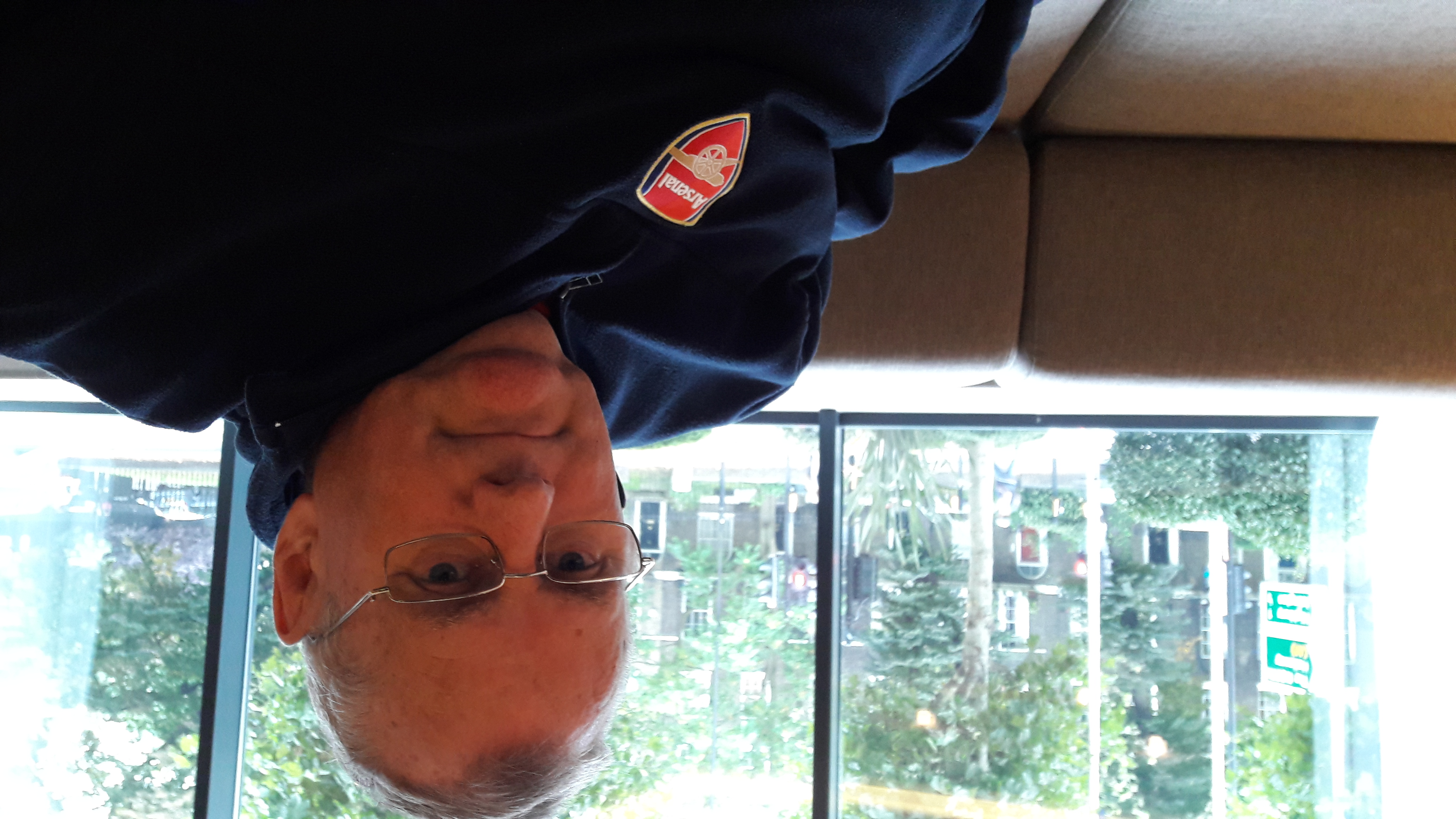
Mick Fitzgerald in pensive mood – it’s either the thought of the next Arsenal game or being interviewed about his childhood haunts by Islington Faces (c) islington faces
“As you get older you are drawn back to where you grew up,” says Mick Fitzgerald. “My mum, who is 98, has got a thing about knowing your roots. She says ‘don’t forget you’re Islington Irish’, says Mick switching from a London accent to a Limerick lilt when he’s quoting his countrymen.

(c) Map data @2017 Google
Mick, 66, now retired after driving tube trains for 42 years, is up in London for the Arsenal match (25 Sep 2017: Arsenal 2 West Brom 0). He’s met up with Islington Faces in Islington’s grandest hotel, the Hilton Doubletree on Pentonville Road. When you check in here guests are served a warm chocolate cookie before being shown their room and there’s a Marco Pierre White steak restaurant. It’s also a magnet for well-behaved Arsenal fans, like Mick, who meet here for bar food before the game. But Mick has an extra special connection with this Hilton because underneath the reception used to be a bombsite where he played as a child games like tin Tan Tommy (Kick the Can). And the bedrooms at the back, facing White Lion Street, are built on site of the brick terraced house where he grew up. These were pulled down in the 1960s as part of Islington’s slum-clearance.
>FOLLOW ISLINGTON FACES by email: a new interview is published every week.
Listening to Mick’s stories it’s clear that he lived in real poverty. In those days school didn’t help tackle deprivation. “Class, architects and MP’s children, went to Lady Owen (now Dame Alice Owen in Barnett), Rising Hill was for the sons and daughters of business people. William Yerbury was for the sons and daughters of stall holders and Bishop Gifford (a secondary modern that has now closed) was a dumping ground for poor Irish and Cockneys. I hated it.”
According to Mick, “the only way to get money was working for it or nicking it.” Luckily Mick had a real appetite for work and from a young age was working on or around Chapel Market, delivering shopping, as a paperboy and at Yearly’s Wholesalers, which had a shop on Baron Street. Like many of the local youngsters he also truanted from school. “We climbed out of the window after register. I’d go to my job. I felt so proud giving Mum housekeeping money.”
Despite no school qualifications Mick found permanent employment easily. “My first job was with WH Smith on Kingsway as a diesel fitter on the vans. I’d just got married and there was a baby on the way when there was row with foreman over 50 pence. I packed it in. But then you could get a job on a Monday and it was a job for life,” so Mick went to work on the underground. He was active in Aslef – as his Mum was with Islington Labour – and so over the years has met all the politicians, inlcuding John Prescott and Jeremy Corbyn.
Note: Micks & Paddys is a term no longer used, because of it’s pejorative and racist connotations, but in post war Islington Mick meant any Irish person, regardless of religion, and Paddy meant Catholic. According to Mick Fitzgerald there was tribal rivalry between the kids with Irish born parents and the Londoners with Cockney-slang speaking parents. You can read about a 1950s Cockney childhood on Islington Faces if you read the interview with David Hammond.
PENTONVILLE ROAD & NEIGHBOURHOOD
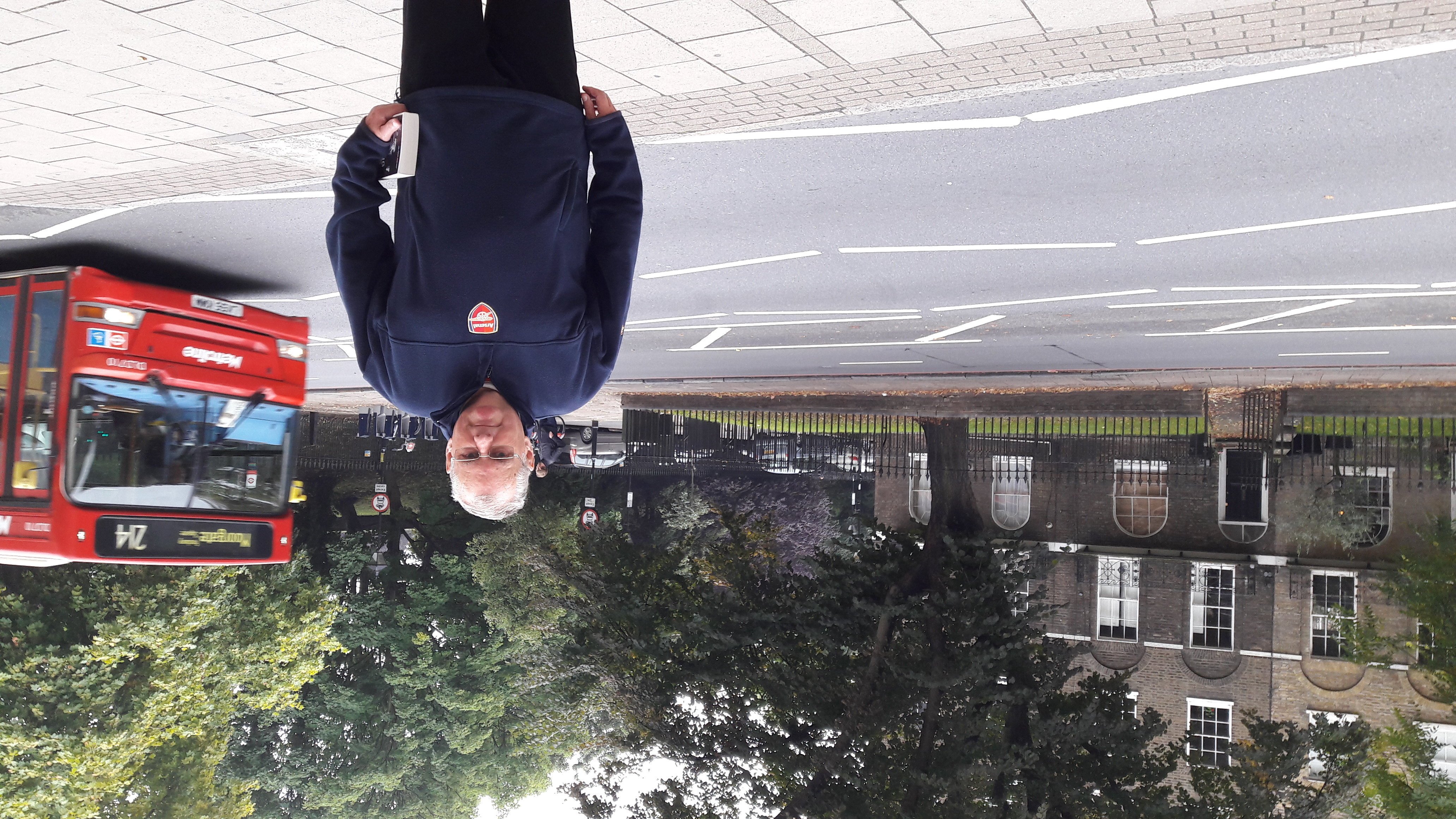
Everyone played in the road – even busy Pentonville Road. Mick Fitzgerald (c) Islington Faces
Pentonville Road (opposite the Hilton Doubletree)
“All the kids would run in the streets playing football between traffic. There weren’t any railings then. We’d play Grand National jumping the walls between the gardens. It was fun.”
Claremont Square
“When we were kids in the ‘50s we’d jump over the wall of the reservoir and go swimming there. I don’t remember anyone drowning.”
Myddleton Square
“The first house was the Doctor’s. The square had the best play swings in London. It was like an oasis in a madhouse.”
BARON STREET
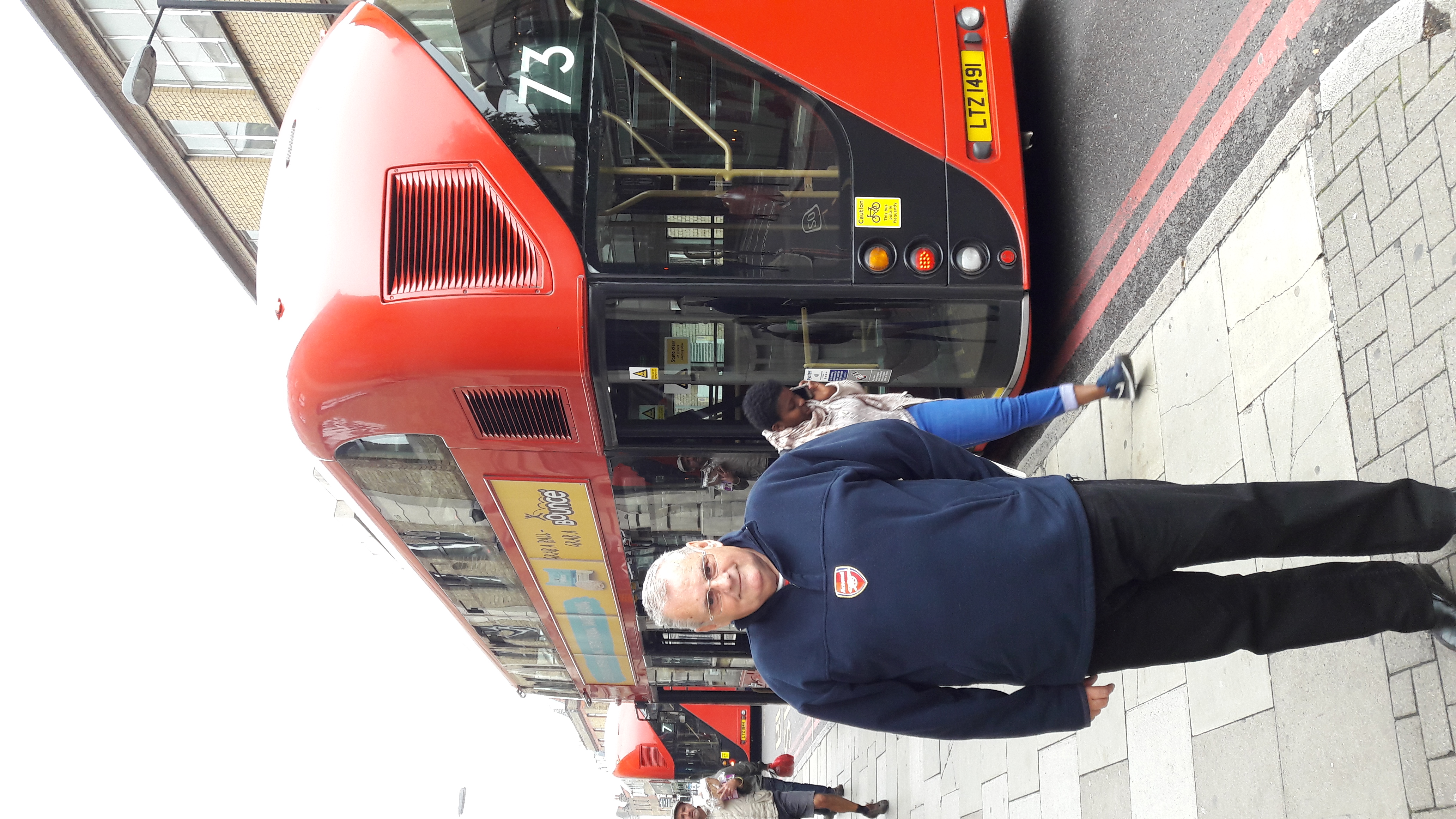
Mick Fitzgerald: “I’d never seen so many people.” (c) islington faces
73 bus
“I was five. I lived with my grandparents in Newcastle West, Co Limerick and they’d sent me, on my own, to join Mum with a group of other Irish children on the boat to Liverpool and then the train to London. This lady with dark hair met me at Euston station. She said “I’m your mum’. We took the 73 to Baron Street. We got off [just after the Pentonville Arms]. People were milling around. I’d never seen so many people in my life. I remember gong ‘hello’ to everyone, like we did in Newcastle West, Co Limerick, until I was put right by my brother. He was 12.”
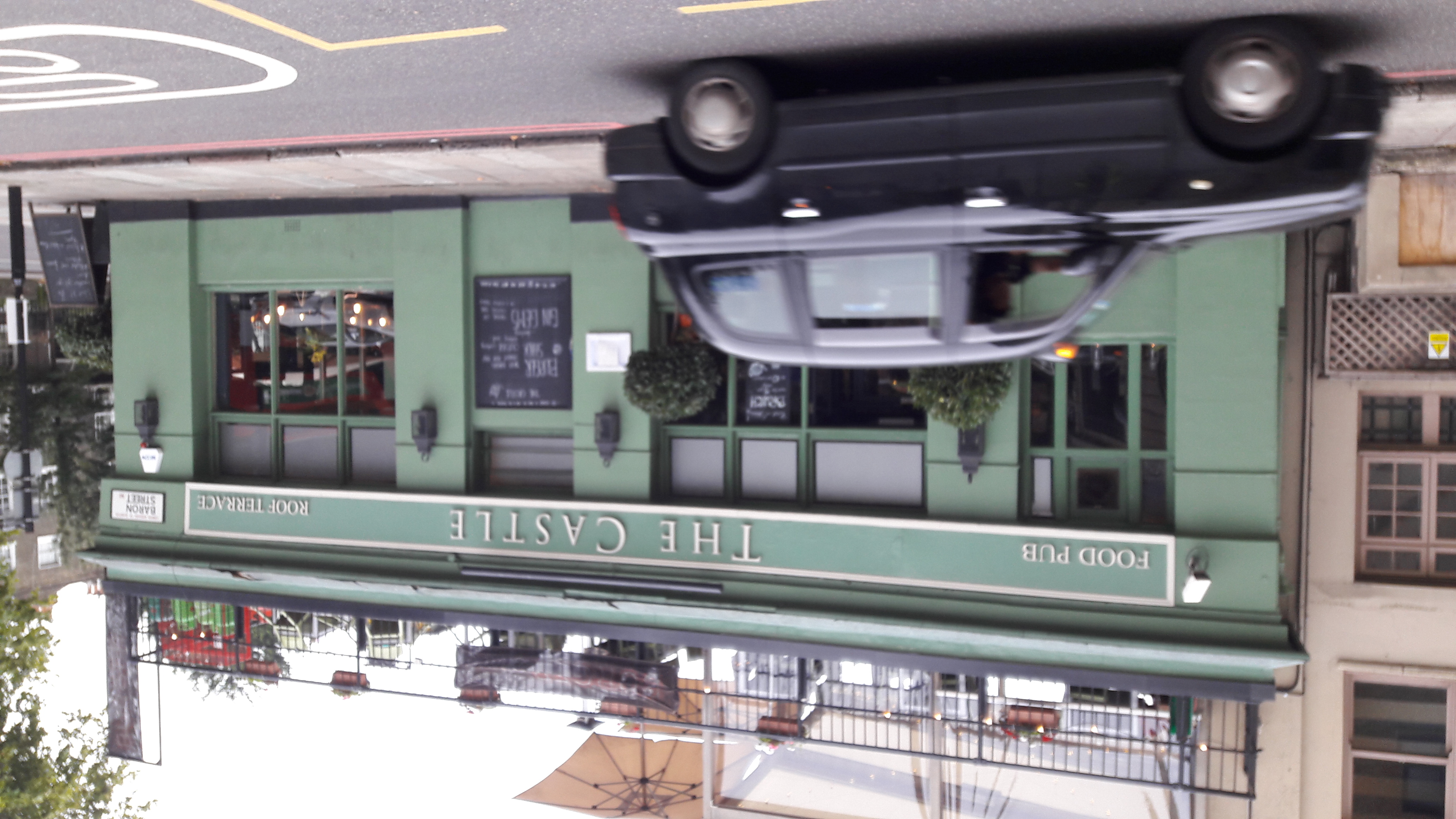
What do you call this pub? It used to be the Pentonville Arms says Mick Fitzgerald (c) Islington Faces
Pentonville Arms (now The Castle)
Pentonville Arms, Baron Street was a Charrington’s pub. Recently it’s been in the news as it’s where the Hatton Garden job was planned. See this news item in the Guardian.
WHITE LION STREET

Mick Fitzgerald outside the spot where he used to live, 34 White Lion Street. It’s now the back of the Doubletree by Hilton Hotel. (c) Islington Faces
34 White Lion Street
“We lived at 34. It was a dump. We Fitzgeralds were on the middle floor with the Murphies in the basement and the Kennedies above us. We all slept in one bedroom. The kitchen was very small so we ate in the lounge on our lap. To this day I’ve only ever seen Mum, who is 98, eat bread and tea. There were no locks on the door. All the doors would be open with a pram outside. It felt so cold inside. The only heating was the cooker. Mum, who worked as a cleaner and went out early to clean offices and private houses, would open the oven door, turn the gas on and put our socks and underwear in it to warm up.”
Mick, who is a huge Gunners fan, now lives in Burnham-on-Crouch, Essex so he’s often up in Islington. But despite having seen it change he is flabbergasted by how different things are now. “It’s only 60 years ago. I can’t believe the poverty in the tenements we lived,” he says. “We moved to Archway in 1969, when I was 17, and the terrace we lived in was flattened. They would have been fantastic if they’d been renovated. But we became private tenants of Islington Council. It was like winning the pools to be a council tenant. Our new place was a four-bedroom end of terrace in N19. It felt like Buckingham Palace.”
Mount Zion Chapel
“Mount Zion Chapel, 71 White Lion Street was opposite where we lived. It was a Baptist Chapel. I’ve read in books that the top floors were for ‘fallen and repentant women’, but when I lived there we never knew any of the history.”
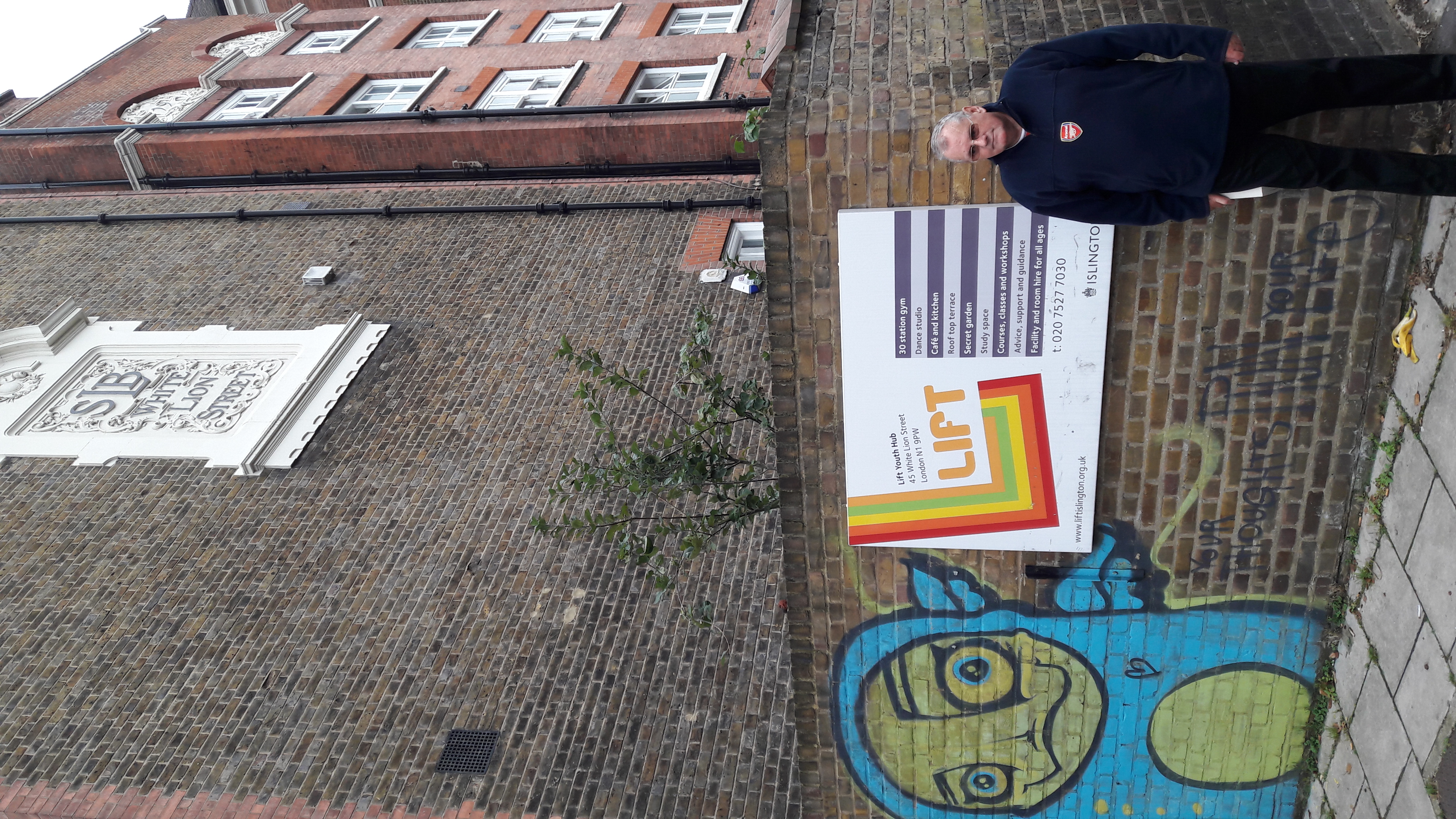
Fab graffiti at the old White Lion Street school. Mick Fitzgerald (c) Islington Faces
White Lion Street School (now Lift youth club, 45 White Lion Street)
“They had a playground on the roof. On Holy Days of Obligation we got the day off from St John’s/Bishop Gifford school. We’d go and taunt the kids at White Lion Street School shouting ‘you f** Protestants, we got the day off and you haven’t.’ But they’d get us back on Guy Fawkes night – we had to stay in because we’d be picked on.”
Penton Grove (no through way now)
“This was an alleyway to Penton Street/Barnsbury Road.”
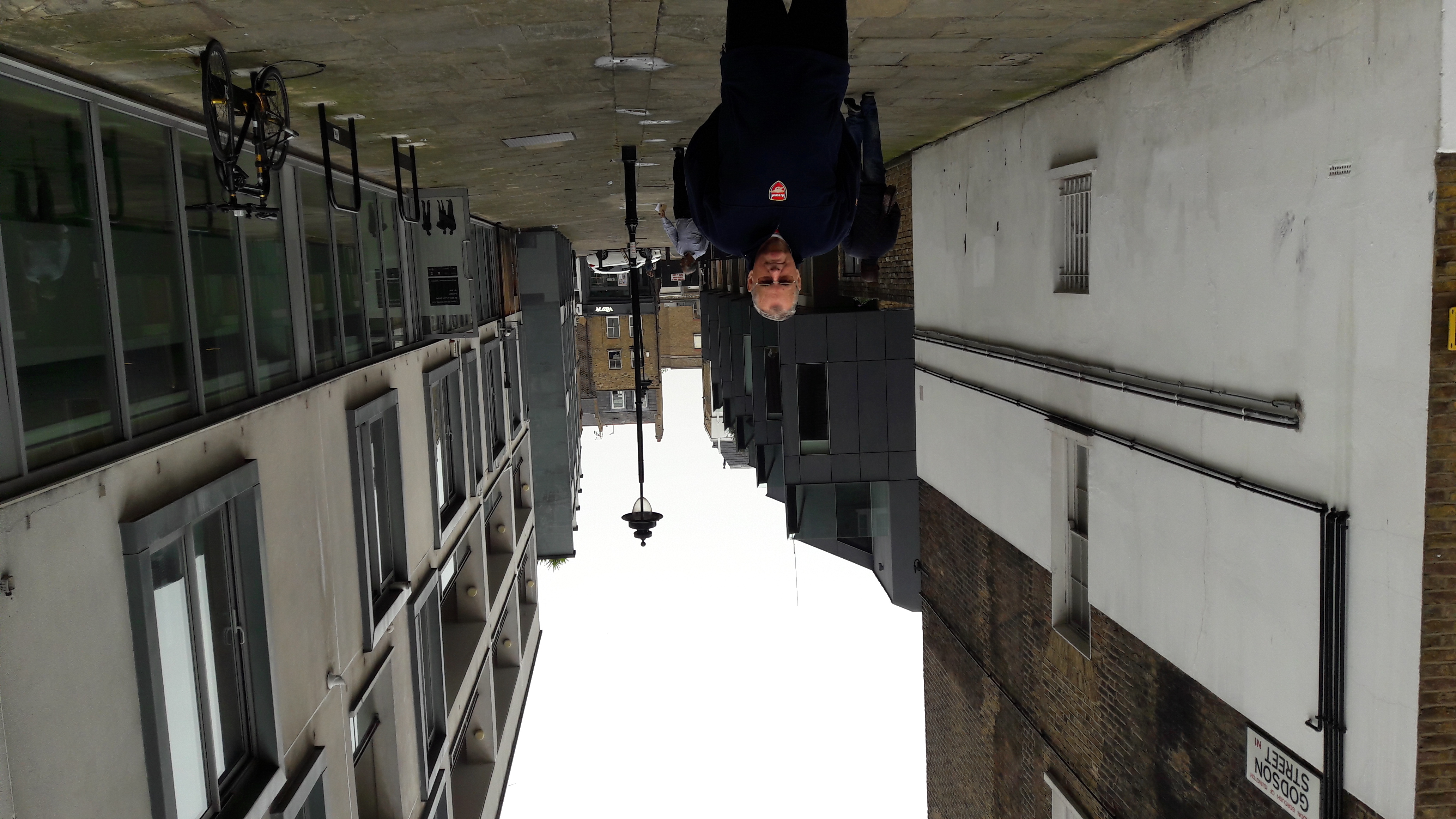
“This was our football pitch,” says Mick Fitzgerald about the alleyway, Godson Street. (c) Islington Faces
>>GODSON STREET (now an alley way with housing)
“This was our football pitch. We’d have two orange boxes as the goals. There’d be 50 kids and we’d tear strips out of each other, girls and boys. We’d play all night until someone’s Mum or Dad said we had to come home.”
>CHAPEL MARKET
“Everyone was on the make. It was 90 per cent fruit and veg stalls then and I remember a stall that sold apple fritters, they were lovely. £12 a year for a pitch. It was all families – there were the Yearlys, Browns, Redrupps, Jacksons, Manzes and two Italian families running coffee bars.
Sainsbury’s
That was where William Hill or Sports Direct was. We’d buy an ounce of butter. One of the very first Tesco’s was on Chapel Street – not the first, that was in Ridley Road, Dalston.
The Alma, 78 Chapel Market
A policeman was stabbed here. It still has a very long bar, but the pub has had an extension. The corner used to be ABC Bakers. http://thealma.london
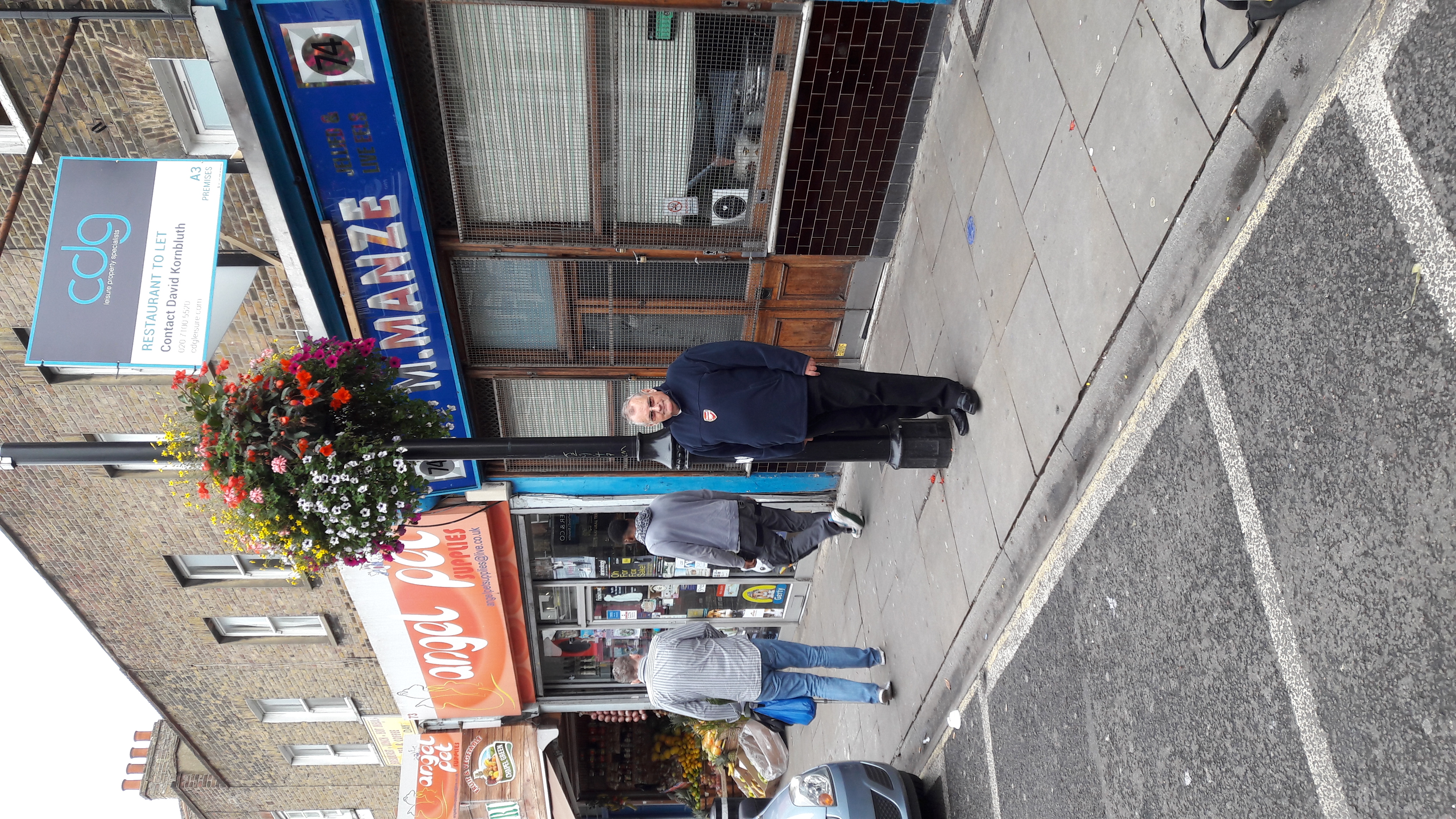
“Pie and mash… it was like going up the Savoy,” says Mick Fitzgerald (c) Islington Faces
Manzes
“We got free dinners at school. In the holidays we’d get pie and mash with green liquor at Manzes, 94 Chapel Market. It was like going up the Savoy. I didn’t like eating the eels but Manze would say ‘you like it or get out’.” M Manze opened in 1902 on Chapel Market and closed in 2017. http://www.manze.co.uk Outside the shop they had a stall (pitch 90). That’s where the live eels swam. I never like eels, but I didn’t like him slitting an eel’s throat, cutting off its head and putting the guts in the bin.”
Beside Manzes stall (91)
“That was the peanut stall. On the other side of the road was the sewing machine shop. Every woman wanted a Singer sewing machine, more even than a Rolls Royce, because they all made their own clothes.”
>On the White Lion Street/Baron Street corner
Stiles the bakers
Stiles the Baker, 61 Chapel Market, had a lovely smell. At ten to four they’d sell the stale bread and broken biscuits.
BARON STREET
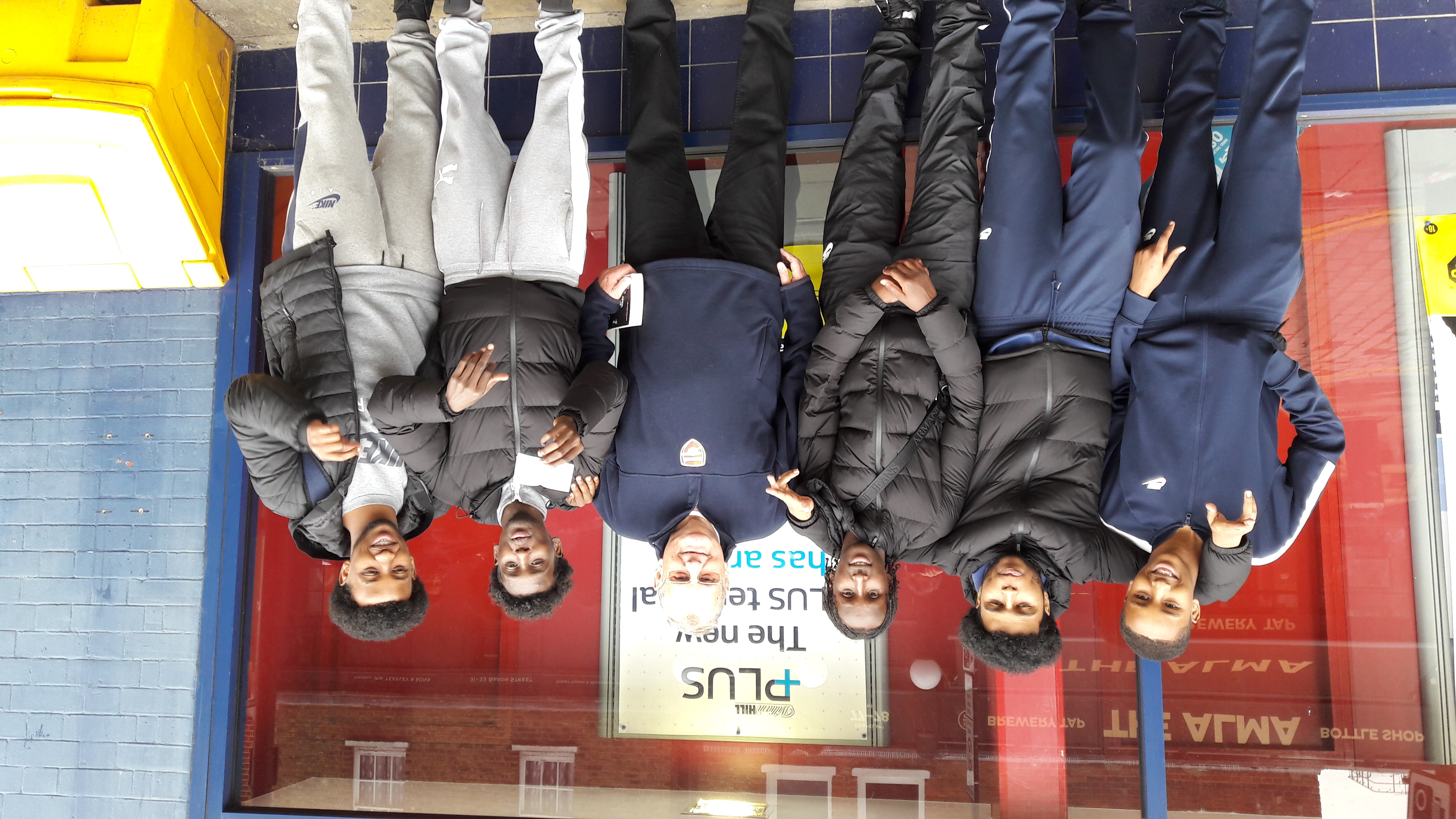
Sixty years on Mick Fitzgerald found that young men are playing the same games around Chapel Market as he used to. Photo shows Mick after a game of penny up the wall (a skill/gambling game). Except nowadays it’s a pound up the wall, and sometimes £2 coins are used. (c) islington faces
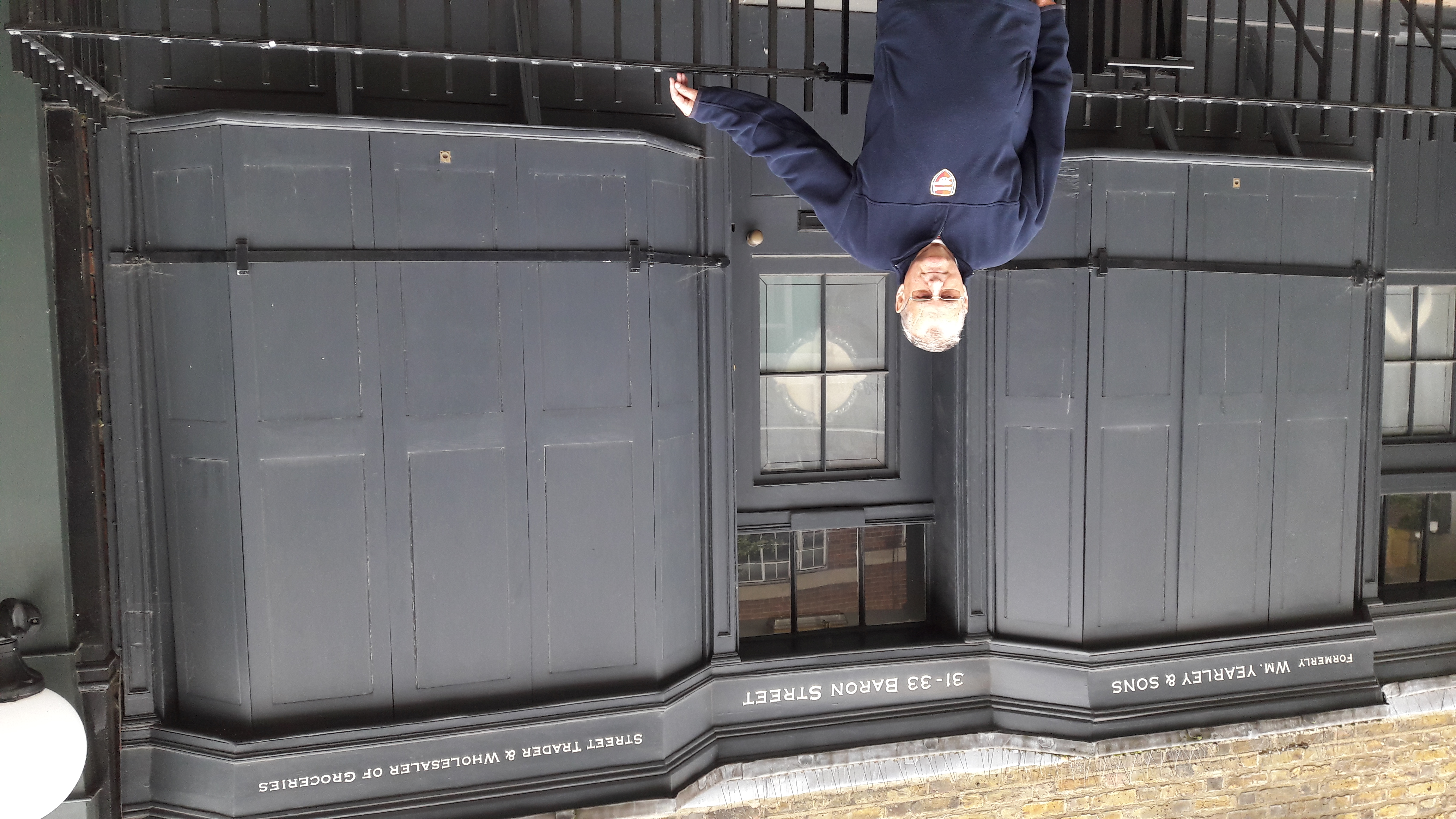
“This is where I worked,” says Mick Fitzgerald (c) Islington Faces
William Michael Yearley & Sons Wholesalers (now a house)
“This is where I worked at W M Yearley & Sons, 31-33 Baron Street. There was a trap door into the basement where we kept stock. They’d sell goods out of the window too.”
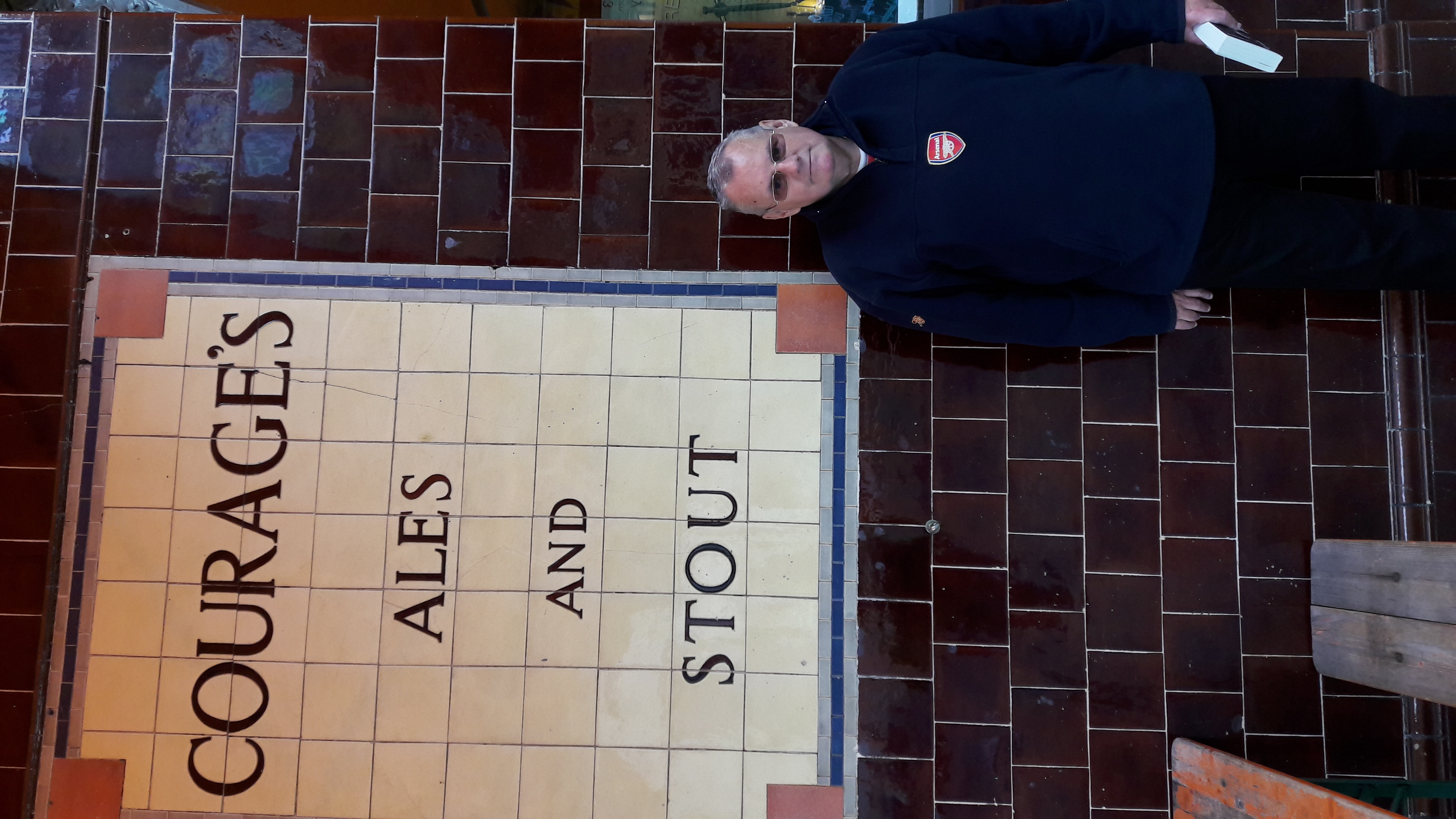
“Proper drinkers would have their favourites,” says Mick Fitzgerald (c) Islington Faces
The Crown (now the 3 Johns)
Proper drinkers would have their favourites – Charrington, Watney, Truman and Young – it’s just like people like craft beer now. The 3 Johns was a Watney house. All the pubs had four or five bars. The snug was where the women went. The public bar was for workman and the saloon had a piano – on a Saturday the Cockneys would be playing Knees Up Mother Brown and the Irish would have diddley-do music. Some of the pubs had a lounge bar, which wasn’t always open. This was for events like a wedding reception and where you’d wear your posh clothes. Every morning the Paddywaggon would stop outside the 3 Johns and the gangmaster picked who would work. The gangmaster was god. Now you see the Irish doing this to the Eastern Europeans, and some are doing worse, making people work like slaves.
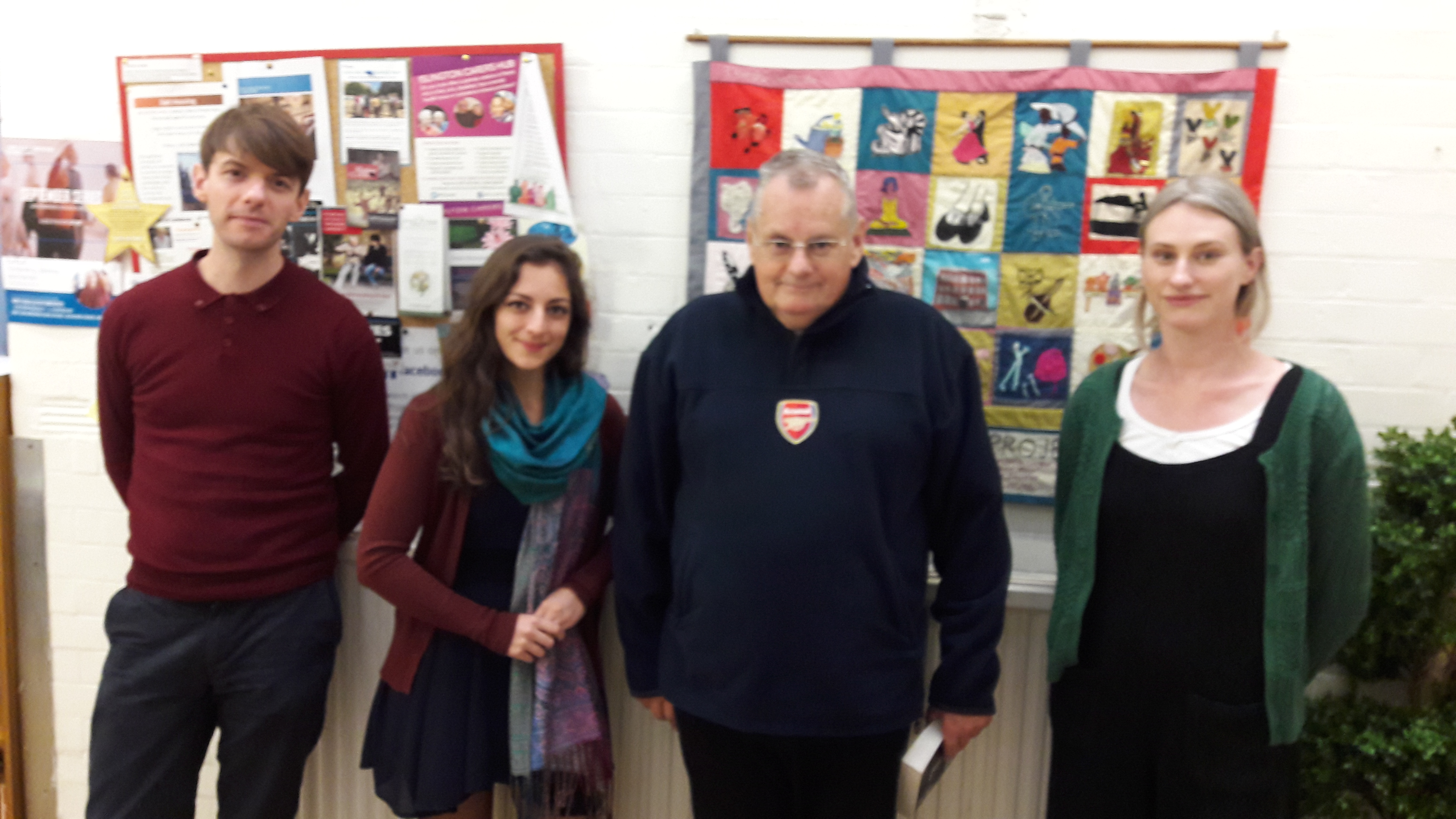
Mick Fitzgerald meets some of the team currently running the Claremont Project (c) Islington Faces
WHITE LION STREET
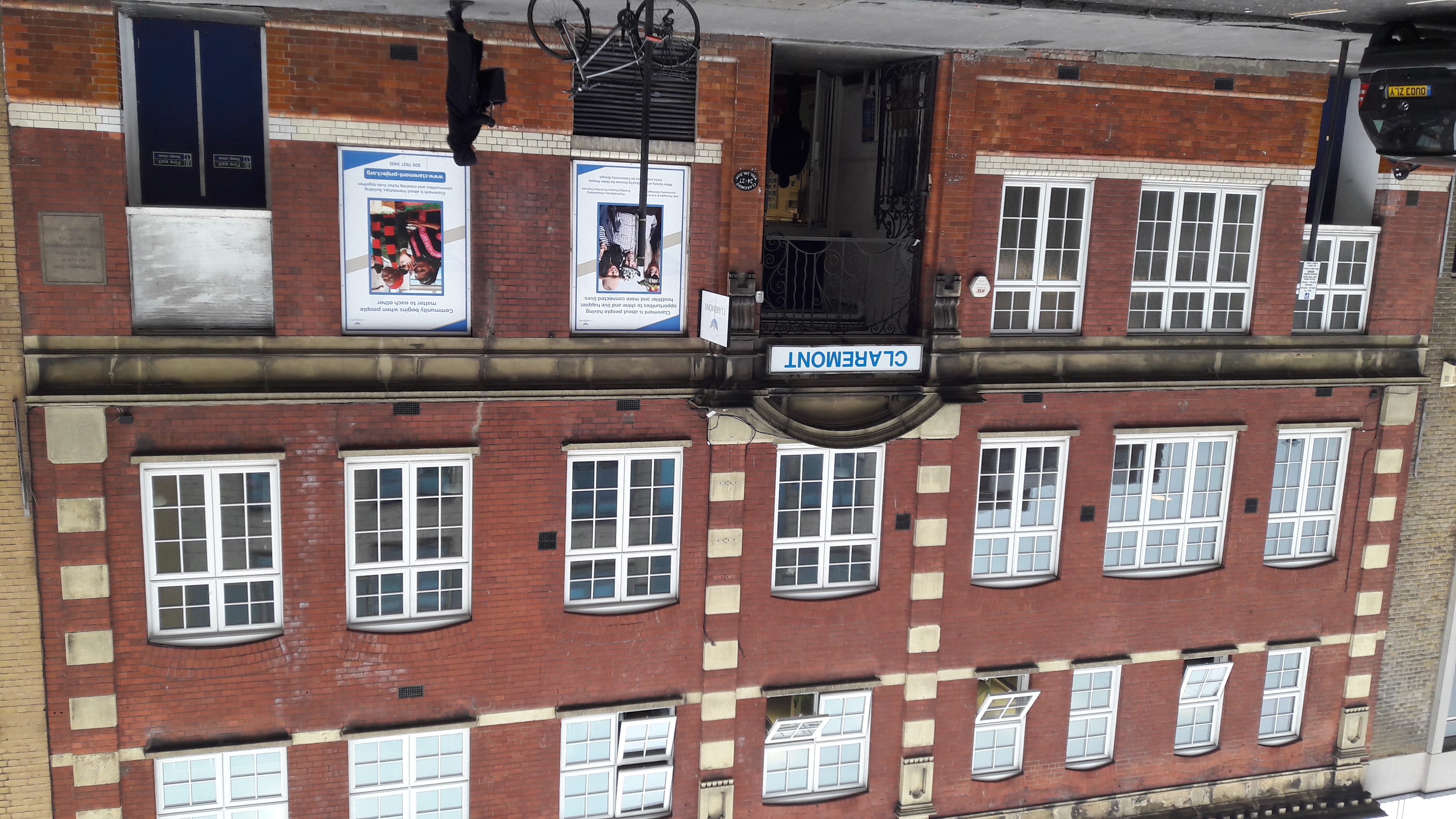
“More hot in number 6,” remembers Mick Fitzgerald outside the old Claremont Mission which had public baths and a laundry in its basement (c) Islington Faces
Claremont Mission (now the Claremont Project)
“The mission at 24-27 White Lion Street had public baths (and a laundry) in the basement. It sounds Medieval but there was nowhere to wash at home. Mum paid one shilling for five of us in the bath. It was all done on seniority so the eldest got the cleanest and warmest water. ‘More hot in Number 12’.”
“In the 1950s there were children with rickets, so even though we were Catholic we’d go to the Mission Sunday School for vitamin C and B12, jam sandwiches and lemonade. And the mothers got milk. I remember it well. I was picked to play football for Islington Boys and Rev Limbar (sp?) at the Mission bought me a pair of football boots.
* 24-27 where North London Cares is now sited, was a congregational church founded in 1819. It provided public baths for the neighbourhood as there were no municipal ones locally. The nearest were at Caledonian Road or Ironmonger Row.
Dunns (now Pret a Manger, 27 Islington High Street)
“Sold posh office jackets and bowler hats.”
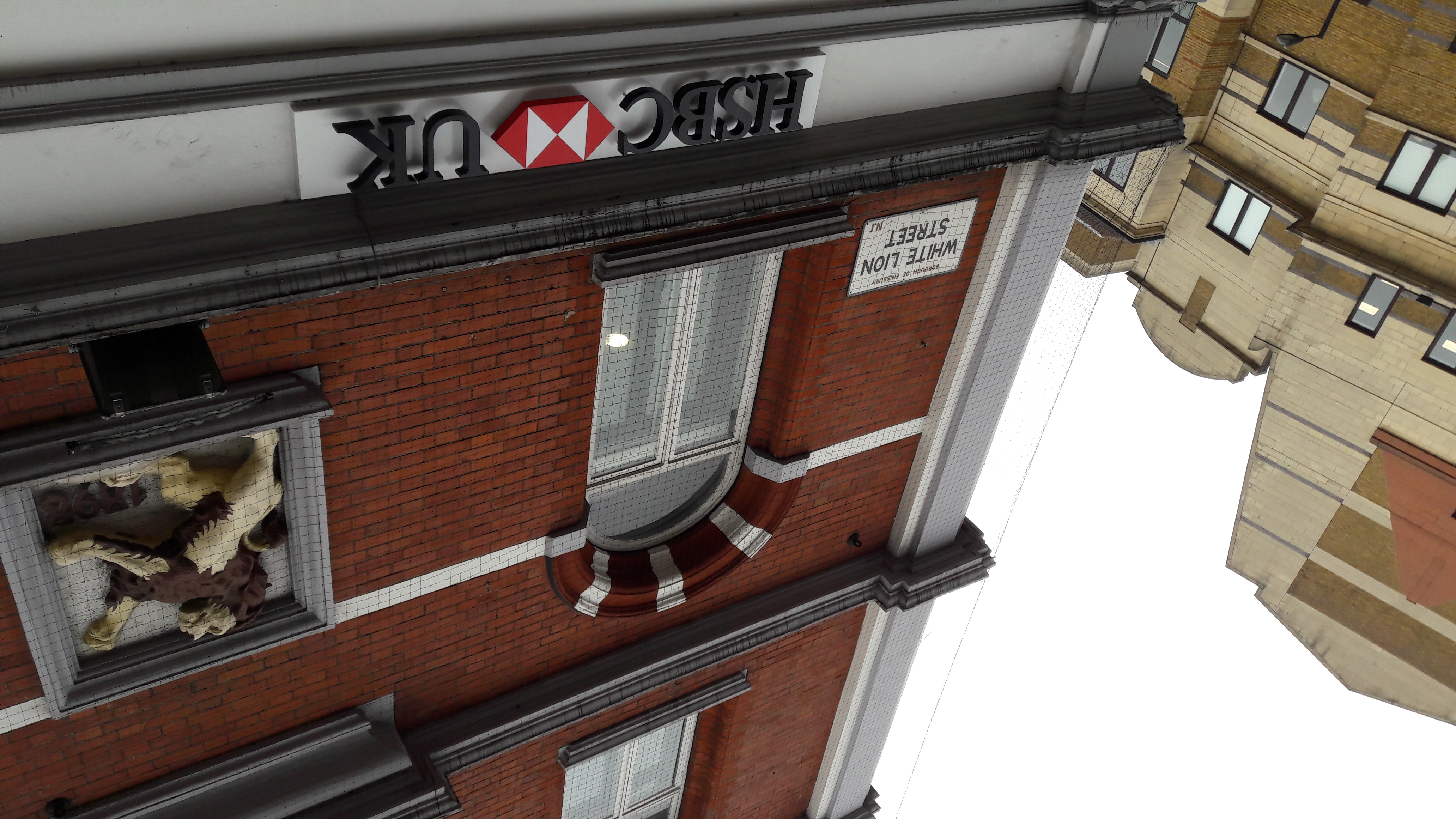
Mick Fitzgerald (c) Islington Faces
White Lion Inn (now HSBC)
“This used to be a coaching inn on the A1. You can still see the stone lions on this building, and a date – 1898.”
ISLINGTON HIGH STREET
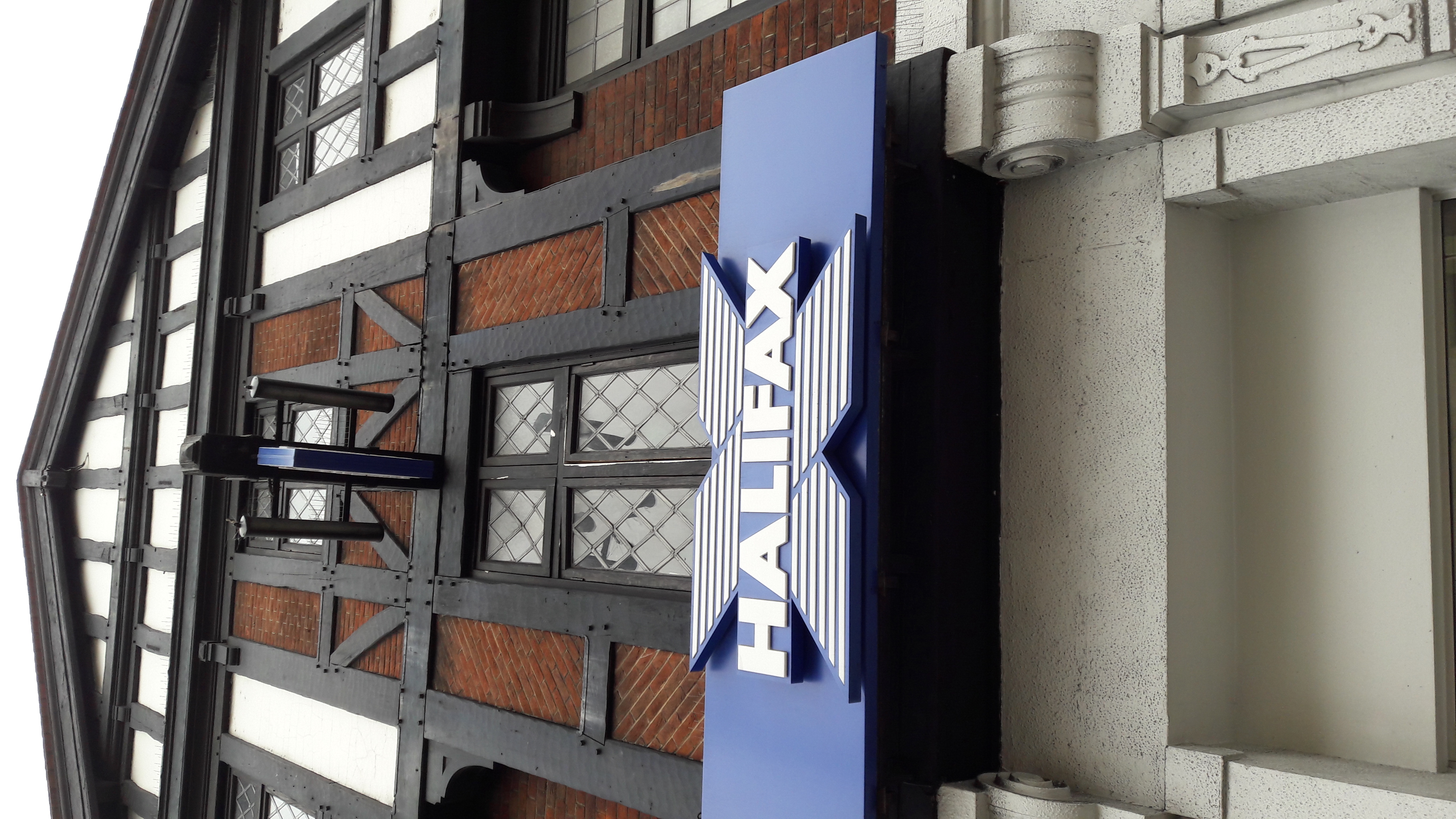
(c) islington faces
Pied Bull (now the Halifax)
All the local kids rehearsed here, it’s how the skiffle groups – just a broom, tea chest and banjo – learnt their trade. If they were out of time someone in the audience would chuck a bottle of beer at you.
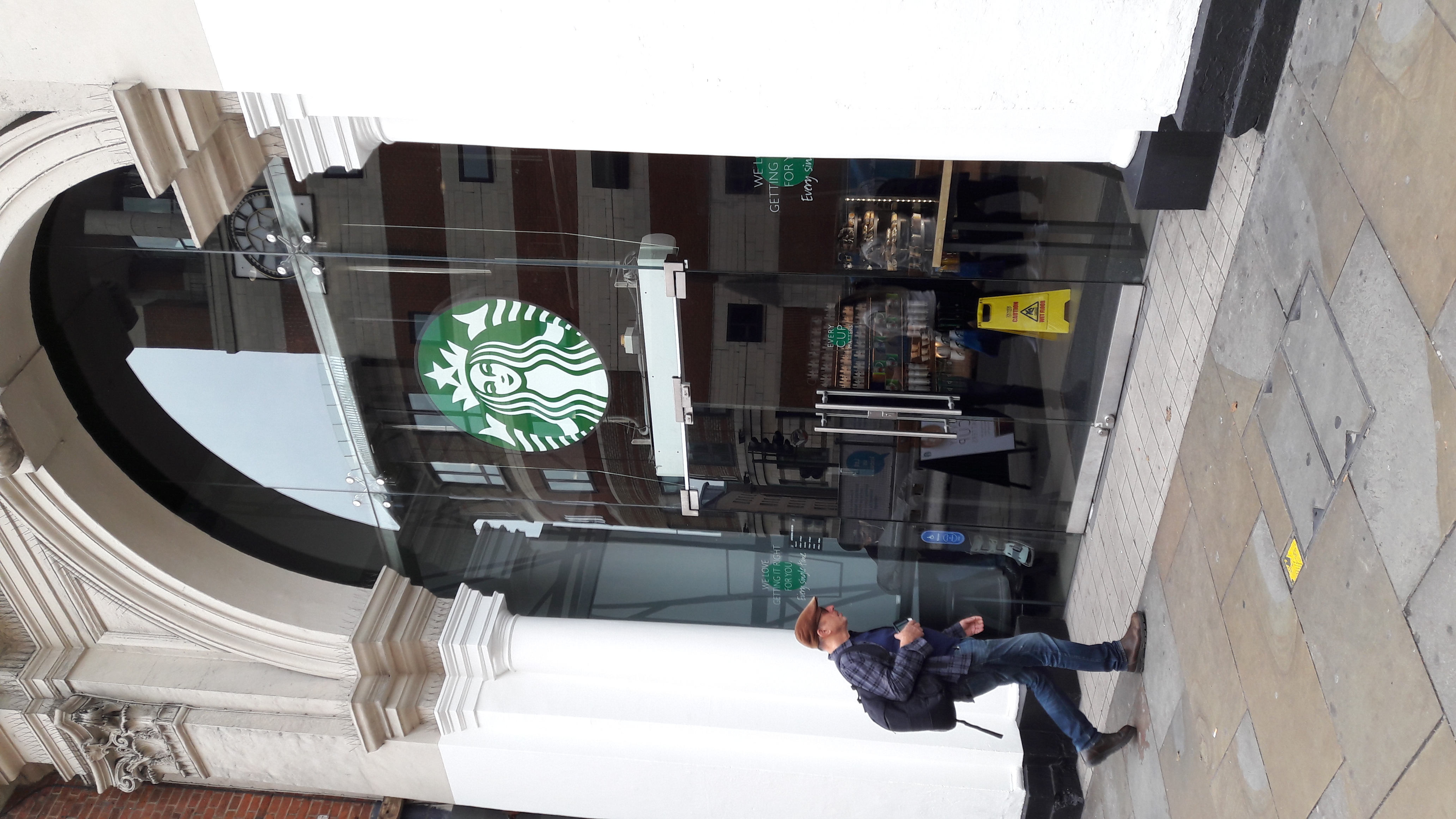
Starbucks is where the old Odeon cinema used to be. Mick Fitzgerald (c) islington faces
Odeon cinema (now Starbucks)
Going to the cinema was the highlight of the week. We’d bunk in at the back entrance on White Lion Street.
Lyon’s Corner House (now the Co-op Bank)
“We’d go once or twice a year if we were lucky. There would be a pot of tea for us all and sandwiches in a tower. There were two floors. Mum’s order was taken by a Nippy, the waitresses who looked really smart in their white aprons, white caps and black dresses, but they looked down on us. They knew we had no money.”
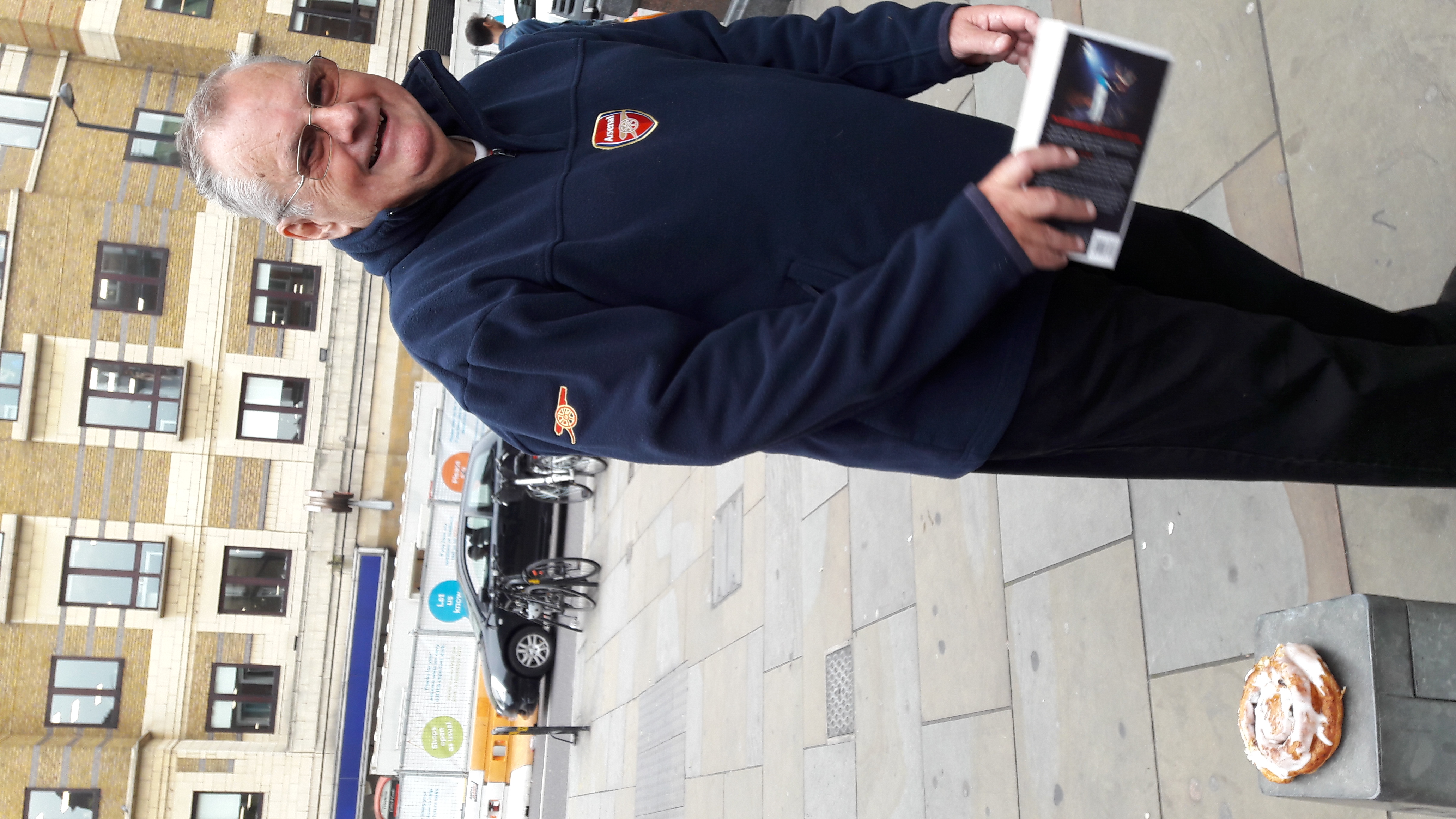
Mick Fitzgerald: “That bun wouldn’t have lasted long when I was living here.” (c) islington faces
SOUNDS OF THE STREET
“At the crossroads of Islington High Street and Pentonville Road there were trolley buses (early 1960s). Angel was the change over section for Old Street, Holborn and King’s Cross. There was a woman with a long stick who had to untangle the wires all day. You’d see a lot of horses then too – the brewery horses delivering the beer, the milkman’s horse and the rag and bone men.”
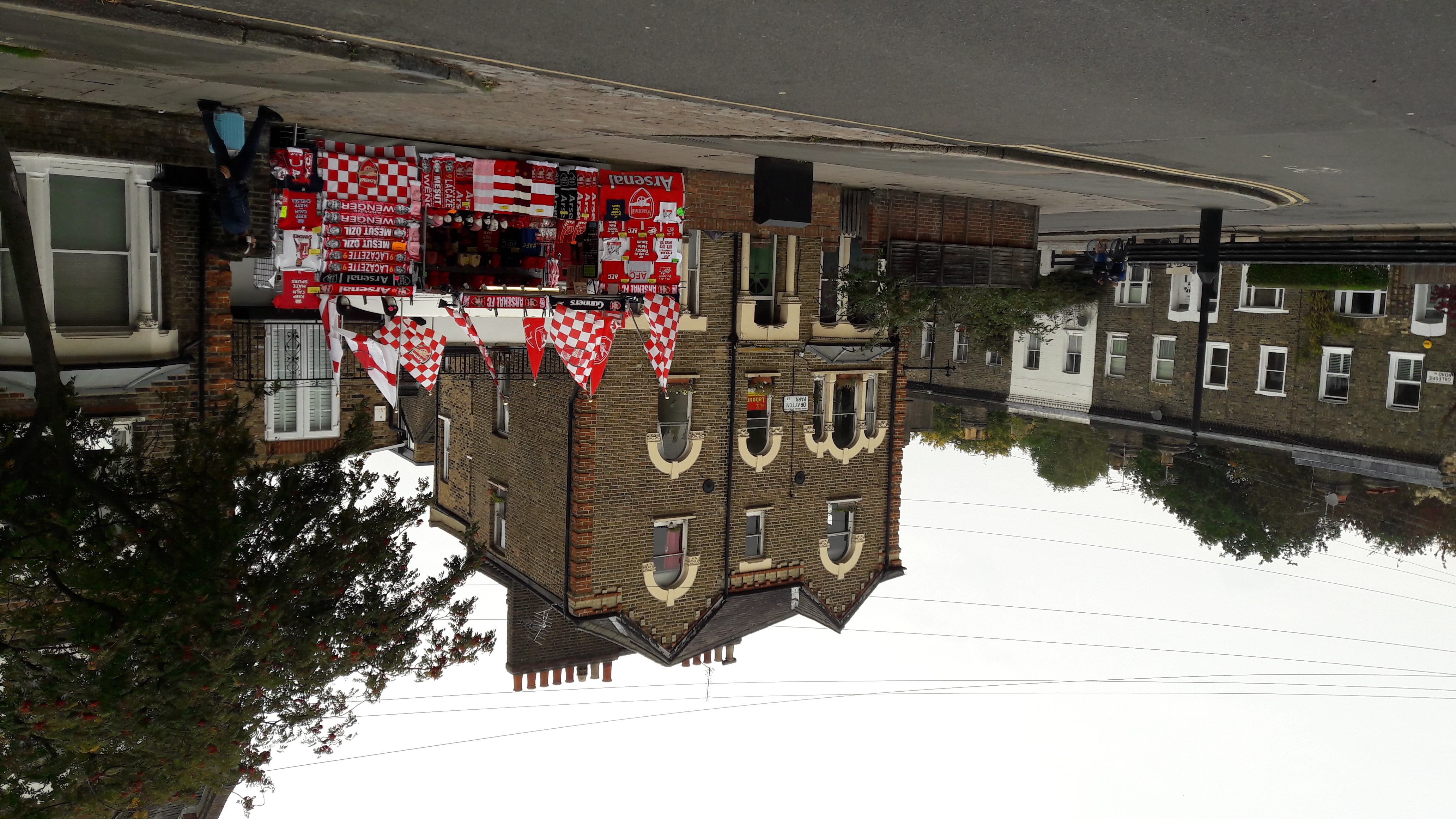
Gunners’ stall on Drayton Park opposite Highbury House and the steps to the Emirates – just a few minutes from Arsenal tube. (c) Islington Faces
SUMMING UP – It was a real treat walking around the streets that Mick grew up in. If you decide to retrace his steps (or your own!) around Islington please do let Islington Faces know. And if you have stories about places you love – or loved – in Islington please get in touch. Apologies as there’s not enough about football on this particular post, but these days one of Mick’s favourite places in Islington is watching Arsenal with friends and family.
- For more history about Penton Street and Chapel Market, see the 2008 Survey of London here
- Head to Lift youth club
- Volunteer or join activities at the Claremont Project
Over to you
If you’d like to nominate someone to be interviewed who grew up, lives or works in Islington, or suggest yourself, please let me know, via nicolabaird.green at gmail.com.
If you enjoyed this post you might like to look at the A-Z index, or search by interviewee’s roles or Meet Islingtonians to find friends, neighbours and inspiration. Thanks for stopping by. Nicola