Estimated reading time:17 minutes, 44 seconds

Everyone has an energy story – this is a 2021 Islington Faces project which will see locals asked what puzzles them about trying to change our carbon hungry habits & find and share solutions from people who live locally.
Everyone has an #energystory #13.
Q: How can people help Islington Council achieve its green ambitions such as the Zero Carbon 2030 strategy?
Each Energy Story interview is inspired by the questions local people ask Islington Faces about cutting carbon/tackling the climate crisis. For this interview our question looks in depth at ethical investment, and in particular Islington Greener Futures 2027 which hopes to raise £1 million. Obviously there are many ways to support the council’s green ambitions, but this is an interesting new idea – investing in the changes you want to see happen locally.
Everyone has a story. As Islington Greener Futures investment is launched, enabling residents to fund Islington projects to tackle the climate crisis (eg, solar panels and safer school streets), we meet one of the cofounders of the company behind it, Karl Harder from Abundance Investment. Interview by Nicola Baird.
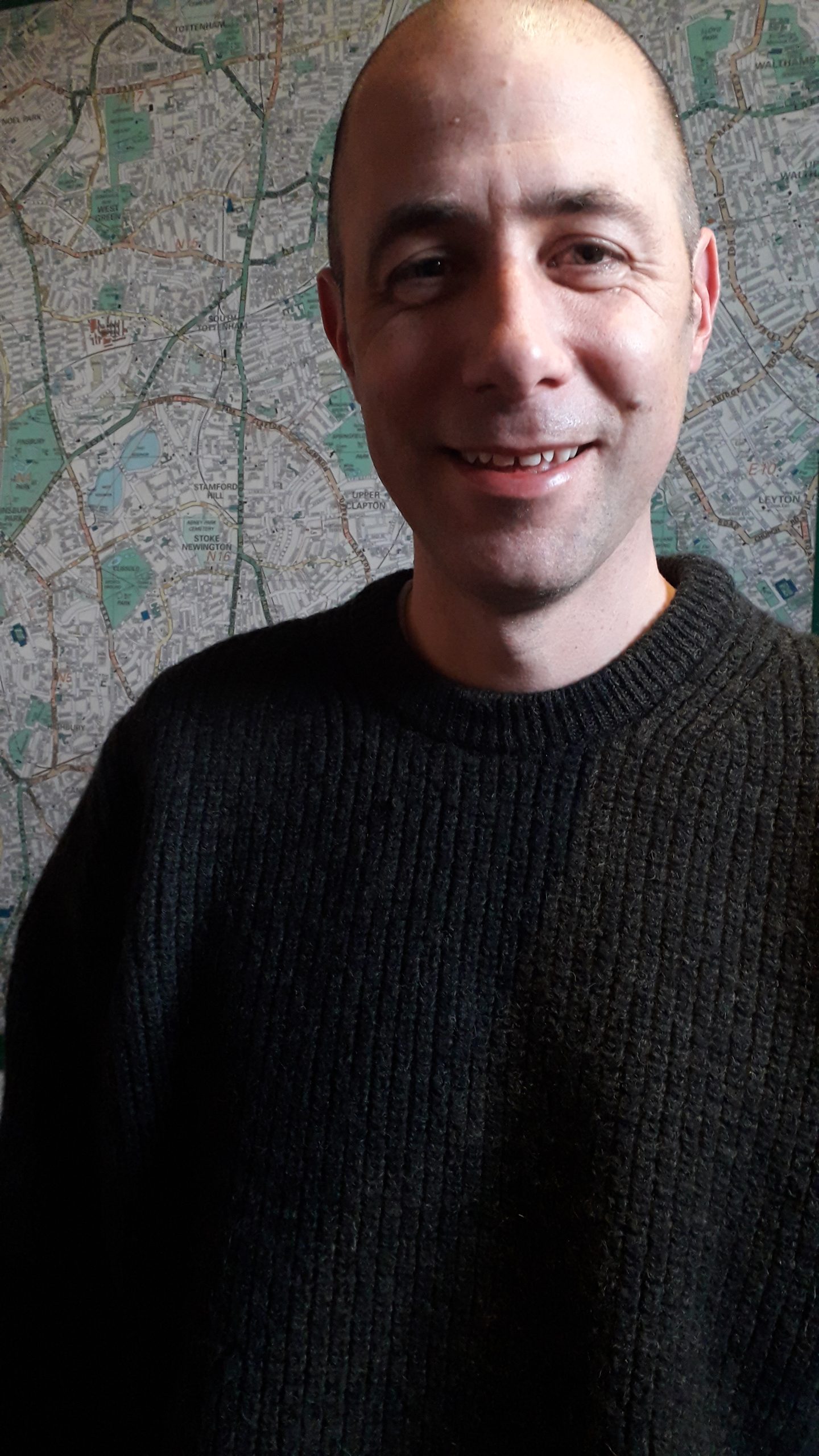
Karl Harder stands by the big London map at Blackstock Kitchen on Blackstock Road: “This is home! When I was younger my centre of gravity was Islington and Camden. Then as I got older Hackney became where people could afford to live.” (c) NB for Islington Faces
Dressed in a warm winter jumper and jeans Karl Harder, the cofounder and joint MD of Abundance, an ethical investment crowdfunding platform, is back in London on a quick trip to see his mum in Newington Green. It’s clear he’s loving being in Islington again, or maybe it’s just that this is his first face-to-face meeting for about a year.
FOLLOW ISLINGTON FACES a new interview is published every week.
“We moved to Stroud in December 2020 after 45 years in one place, Islington and Hackney. My wife and I will come back here, but we wanted to do something different as both of us like climbing and water sports, so we thought we’d go radical and go somewhere completely different. It’s a bit more like Stoke Newington used to be and where we’d lived for 15 years,” says Karl over soup and coffee. Now living surrounded by woods and space, he has plans to fix up the 1970s home the family moved into making it more eco-friendly, while also working and enjoying his three children aged 14, 11 and four and a half years.
Islington Faces is meeting Karl, 46, because he runs an ethical investment platform to allow people to invest their money into infrastructure projects needed to “tackle the climate emergency and create a fairer, greener future for all.” Excitingly Islington is now the first London borough to use this crowdfunding platform to raise money to pay for their climate emergency plans and the Net Zero Carbon 2030 policy. Money raised from residents and others will go on upgrading recycling facilities, buying solar panels, expanding the electric fleet and more School Streets.
Excitingly the scheme is already 69 per cent funded just before Christmas 2021 and 80% at the start of January – the target is £1 million and the minimum investment is just £5. See https://www.abundanceinvestment.com/invest-now/islington-greener-futures-2027
So how did Karl, whose dad worked for Islington council, end up in ethical investments? It’s a journey which started on Englefied Road, N1 on the Islington side, and soon saw him enrolled at William Tyndale primary school during their most experimental phase.
“I went when there were no rules, I had a lot of fun but as I couldn’t read or write my parents moved me to St John’s, Highbury. Then I went to Forest School in Whipps Cross. The school bus picked us up from Essex Road,” says Karl who enjoyed his London education.
“My parents kept me and my two brothers completely knackered by doing sport, but I had mates that went off the rails. Growing up in London there are plenty of opportunities to get distracted! Just walking back from school people approach and offer you things, most kids manage to navigate that, but some do not,” he says. And he liked London so much that he stayed for university, first studying Environmental Science, and then doing a Masters in Environmental Policy, both at King’s College on the Strand.
This environmental training helped Karl land a first job as a policy researcher for a trio of Lib Dem MPs – Sir Malcolm Bruce, Alistair Carmichael and Colin Breed. “That was great. I was quite idealistic and thought I could change the world. But the parliamentary system, especially if you are working for a minority opposition, is not going to change the world. Green issues were not fashionable then, though by now in 2021 we are in 2nd or 3rd big wave of environmental awakening,” says Karl.
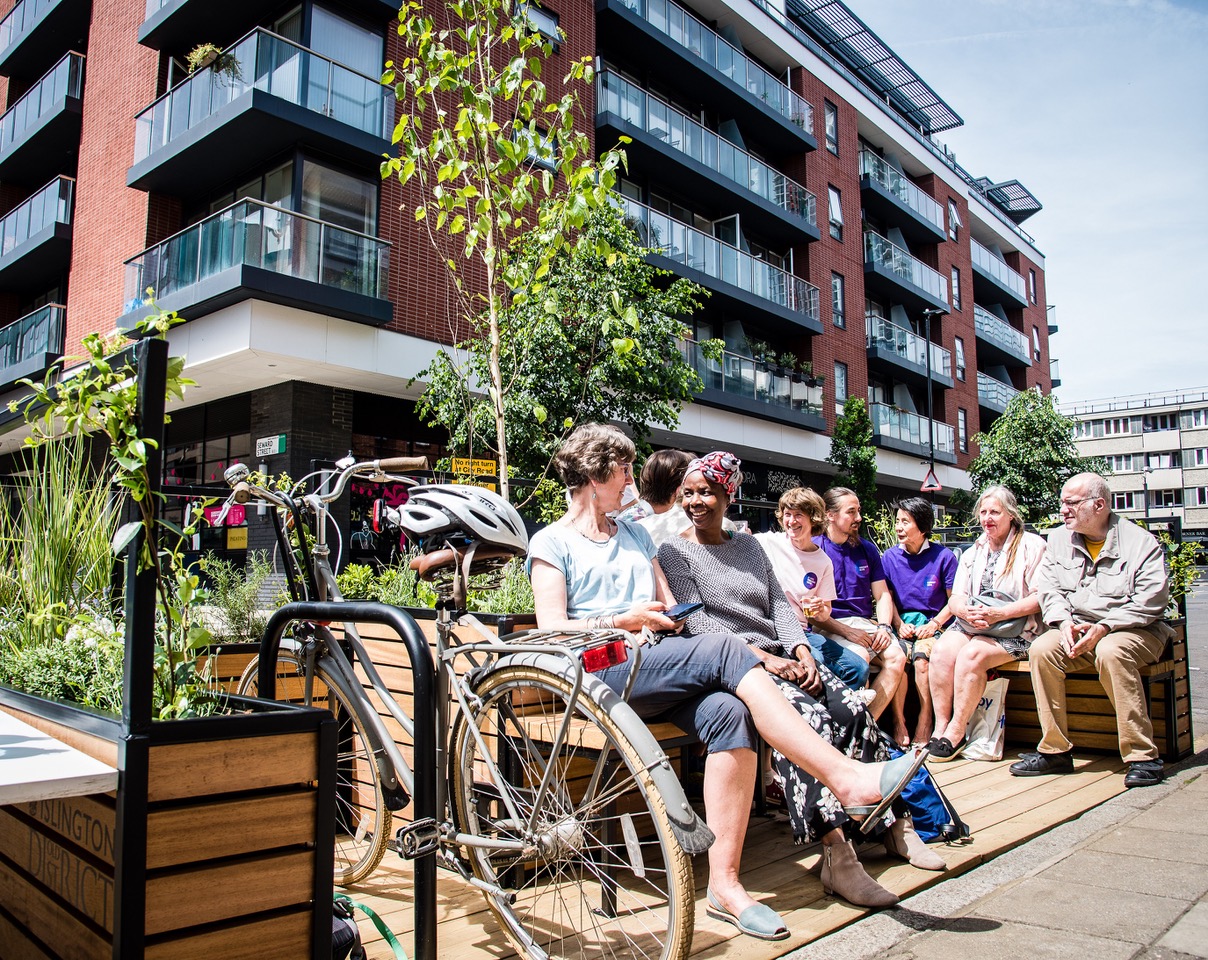
Karl Harder: “Abundance Investment allows people to take control of their money and use it to not only earn a return, but have a meaningful impact on tackling the climate emergency.” Projects for the future might include green initiatives similar to this Islington parklet (c) Islington Borough Council
Places Karl Harder enjoys in Islington
- For 30-40 years I’ve been going to Adana 01, 25-27 Green Lanes, Newington Green, N16 for a kebab. I’ll have Iskender kebab, with yogurt, tomato and grilled meat. I’m still eating meat but I’ve cut down a huge amount in past four years, I now eat meat perhaps once or twice a month as a treat.
- Patrick Vieira and Tony Adams are my heroes. I’ve never had an Arsenal season ticket, which is a good thing because my track record of going to games is really poor. For instance I bookended Arsenal’s FA Cup double win. I took my son to the game with Blackburn in 2013 when Arsenal was knocked out by Blackburn who were a division below us, the next game we went to was in 2016 when their FA cup winning streak was ended by Watford! In the last decade or so the only time I have been in stadium when Arsenal has won was when I was watching with Bolton fans in the away end!
- I really enjoyed Islington Boat Club from when I was about eight to 12. I turned up in the holidays and canoed and sailed toppers. I started rowing when I was a teenager and joined the Lea, when it was the number one rowing club in the country. It really benefited from ILEA funding: a huge number of people from local schools were trained up and went to the world championships and Olympics. And I rowed at university.
- When I think about places to live Islington has everything near it – the Castle Climbing Centre, West Reservoir, Arsenal, food from every corner of the world and fantastic night life.
Q: Do you fly for work? I haven’t flown since 2017. I will have to fly again as I have a brother in law in America and relatives in Australia. I’m limiting it for family holidays.
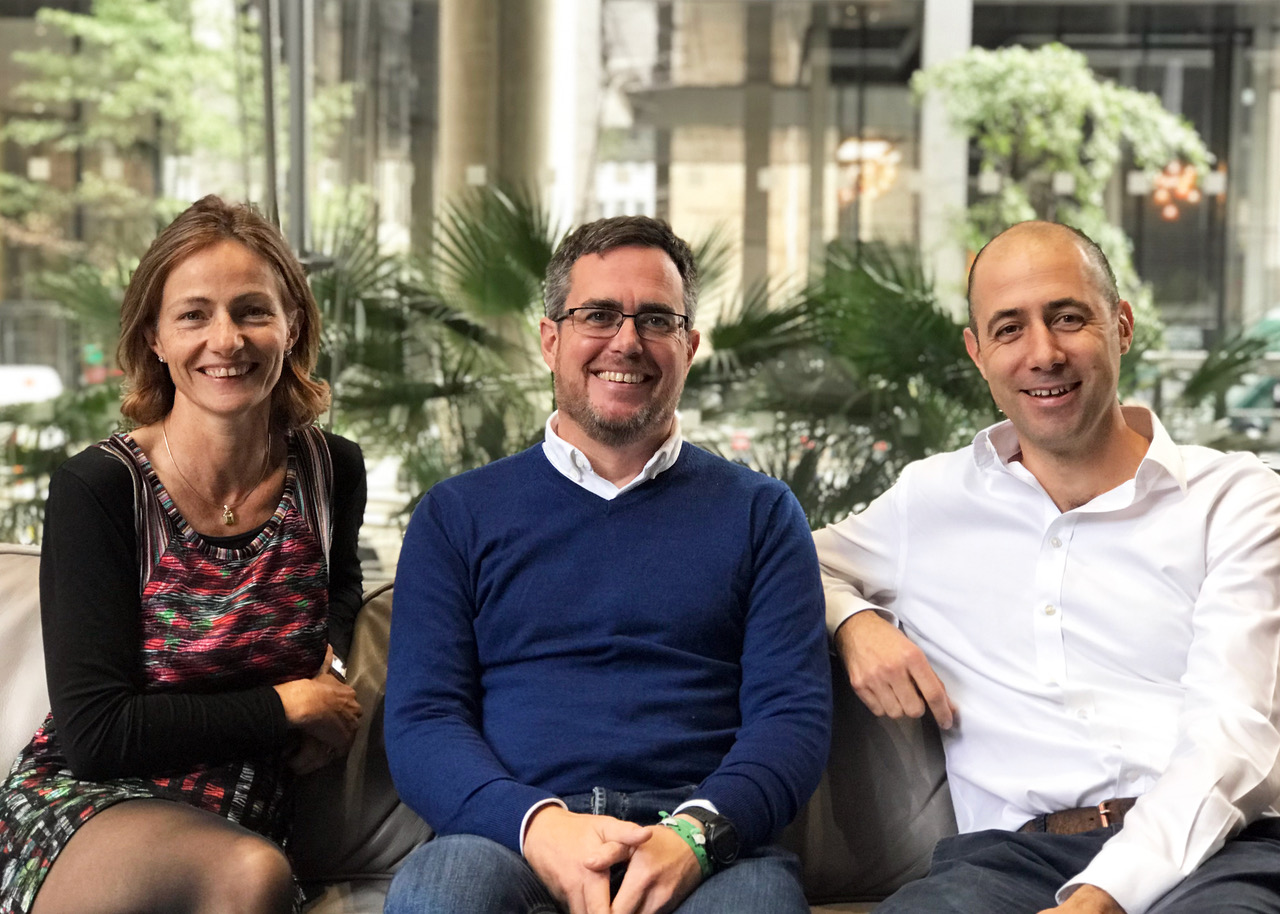
Abundance directors: L-R, Louise Wilson, Bruce Davis and Karl Harder. Karl Harder: “Our platform is a home for motivated investors looking to make an impact with their money.” (c) Abundance
Ethical investing
In 2006 Karl secured a grant to set up a social enterprise for the ethical sector which created a digital currency allowing money to be only spent in ethical businesses. “This was before bitcoin and the emergence of cryptocurrencies,” says Karl who admits that he found the task that much harder thanks to not having web skills. But there were some important lessons and successes: “We evolved this concept into a buying club for businesses to buy environmental office supplies cheaper, it was called Green Your Office. We also set up a cleaning company which worked with London Citizen to provide the first London Living Wage cleaning service, with Anita Roddick (who founded the Body Shop) as the main investor. The driver for us was going into a business and saying you are paying loads of money to a consultant to assess your environmental impact, so pay us a bit more and we’ll pay our cleaners a living wage, and amongst other things they will weigh your rubbish and recycling and give you an up-to-date environmental report. This means that you can tell floor 1 they are worse than floor 2 at recycling, and create a bit of competition to drive change. That worked really well and it was fun,” he says.t also helped Karl look deeply at the people he was working with. “Most cleaners were working in multiple jobs, and if they had children often both parents were working so we’d negotiate for their kids to be brought in and allowed to do homework or simply play on an X-Box so they could be nearer their parents.”
While working at Green Your Office Karl had the idea of getting a group to cooperatively buy wind turbines (that generate renewable electricity) and that ultimately led to the idea of Abundance, his current business, which operates a platform which enables people to finance the building of low carbon infrastructure rather than having this funded via traditional institutions, the banks. “Around 2008-09 climate knowledge was on the up,” says Karl, but “there was a lot of resistance and misunderstanding about the technologies, so we thought the more we can involve people in the energy transition the more we could build understanding and support. At the same time we knew there was a growing demand from people to take control of their money and move it from environmentally destructive investments to more positive investments.”
That’s when “My friend Will Davies, an academic at Goldsmiths, introduced me to Bruce Davis who was founder of Zopa, the first peer-to-peer lending company. I sketched out a website with a bloke with a placard saying ‘my money, my voice’ putting people into control of what their money did in the world. We got talking in the British Library over a double espresso and that’s how Abundance started.”
After a few months the pair were introduced to Louise Wilson who’d been in investment banking. Karl says, “She was on the list of top 50 most influential women in the City. She’s a powerful force of nature who shook us and the business idea into shape and got the hard part of the business thought through. The three of us went on to set it up. It was the first crowdfunding platform – though we didn’t use that term as it didn’t exist in 2008-09 – to get regulated by Financial Services Authority (now the Financial Conduct Authority), It’s so bizarre, it was impossible back then for people to invest £5 into companies or projects they cared about – many people told us at the time that what we were envisaging was impossible.
Investment crowdfunding is now a highly regulated and successful part of the financial services industry. Enabling people to buy shares or lend money to companies and other organisations. This allows people to use their money to create the change they want to see in the world, while also earning a financial return.
Abundance started funding companies delivering green projects but is increasingly working with councils helping them raise money from their residents to back their decarbonisation plans. “Nearly 80 per cent of councils have declared climate emergencies and many have set net zero targets ahead of the UK. Therefore, councils are having to borrow money to finance their decarbonisation plans, demonstrate leadership in their communities and show that the issue is being taken seriously. It’s a catalyst to provoke wider change,” explains Karl.
This means that rather than councils going to institutional lenders, they can raise money from their residents. Councils up to perhaps 30 years ago used to keep things local and raise money from their residents. However, the last bonds were repaid in the 1990s and the model abandoned, primarily due to the cost and administrative hassle of doing things in the age of paper. Essentially what Abundance is doing is bringing back the model for the digital age suggests Karl.
It’s clearly a good opportunity for individuals with money – although it’s set up so you can lend just £5 if you want to do so. It is a sad reality that only 50% on average of any community have sufficient money to save and invest. Therefore, the mechanism of lending money to a council has to be delivered in way which benefits the community as a whole – we achieve this by ensuring that money from residents is cheaper for the council than other sources, what we have also seen on the first council bonds is altruistic investors donating some or all of their interest back to the council to increase the impact.
For councils it’s a winner too: a way of reducing the cost of borrowing, but also a plank for the community to support the council’s climate crisis strategies.
Building connection
“Even though My dad worked for Islington Council, before starting working with councils I did not know exactly what they did. I did not appreciate that they provided adult and social care and certainly did not understand that on top of those core services they had 3,500 further statutory objectives from checking monuments to cafe hygiene. Most people just think the council is rubbish collection! Local authorities are the most trusted part of the whole British system, but that’s not saying much. One of the reasons trust has broken down is because people don’t understand what the council does,” says Karl.
Now with a 31 January 2022 deadline (extended from 31 Dec 2021), £1 million is a big target, but Karl has confidence it will be met. “When we first do it with councils, we use a broad spectrum of people and try and build the local awareness. People don’t wake up in the morning and think ‘I’m going to lend my council money!’. They have to hear about it or know that a friend’s done it. It will take time to rebuild the culture of local saving and investing.”
One thing he notes is residents’ frustration at the time lag between planning and action. “Some of the things residents (like Islington Environmental Emergency Alliance and Islington XR) wanted to see the council doing was not in the bond. But this was signed off in February 2020, so if a group is interested in something happening and lobby for it, then there will be a two-year gap as the proper process is agreed,” says Karl. “In this context the bond becomes a means of engaging with and building a better understanding of your council, so that in time you can engage more effectively to drive change.”
Local love
Focus groups run by Abundance found out that some residents would be willing to donate the interest they earn on their council bond back to the council to support other climate projects in their area. “It was suggested by lady in a focus group in Warrington who said, ‘I love my council, my area. I understand that lending money to my council is low risk. I would therefore like to give my interest back to the council so they can do more to tackle the climate emergency.’ We tested the idea in West Berkshire and found it was quite successful. What’s interesting is our expectation that donation rates would be higher from residents than non-residents. But in the first two community municipal investments it’s been higher from outside the region than inside,” he says.
“The donation element is the exciting part. If you build that engagement, people are then happy to donate interest back to the council to help with other elements of the council’s decarbonisation plan. So you can do a little bit more to help your council. So far in West Berkshire and Warrington about 10 % has been donated back. Islington is the third council we’ve partnered with, so hopefully Islington will do a bit better,” says Karl.
From Karl’s perspective, this type of funding offers local areas better resilience too. He says: “If we start to scale this up for the next 5-10 years it will be ready for when the next crisis hits – during Covid lockdown millions were donated to the NHS, but not to councils who were holding their communities together for more vulnerable residents. And people might be happy to wipe off their interest in its entirety if they feel financially secure and therefore able to help their community weather the crisis.”
Thinking it through
Karl has taken a career route that doesn’t just help him to fix the climate crisis, it also brings many of us along with him. “I started as an eco-centric anti-capitalist thinking we need to go back to mud huts, with environmentalism focused on zero growth; then I thought that’s just impossible, we’ve got to find ways to grow sustainably. I was influenced by Factor 4: doubling wealth, halving resource use and Natural Capitalism, books by Amory Lovins which argue that super efficiency and mimicking nature wherever possible is the solution. Fundamentally the vast majority of people are not going to curtail their ambition for material items so we need to find ways of satisfying their desires in sustainable ways.
“I was complacent for a few years – I thought I trusted the system to correct itself.
“I was working my life, and thinking everyone is sorting it, but the world wasn’t fixing it. But the economic boom we are all enjoying was on the back of the growth of China, and that economic boom was faster and the carbon emissions therefore more intense than was forecast when I was studying environmental science.
“Then in 2017-18 it struck home how off-track the world was, a successful transition is now only possible I believe with people making some painful decisions about the way we live, we need to find ways to encourage people to change their lifestyles. Having studied environmental science what is scary is that the impacts of climate change we discussed as worse case are now happening – methane leaking out of the tundra; the slowing of the Gulf Stream and disruption of the jet stream and obviously large sections of the Greenland ice sheet severing off.
“Going back to those university classes where it was clear we knew what needed to be done. I was therefore complacent, I thought armed with that knowledge we would fix things – a little naive perhaps,” he says. But at least that’s not so true now – Islington has its Zero Carbon Policy while the UK government (along with the COP26 attendees) is meant to cut carbon by 70 per cent by 2030.
“There is a huge amount still to do to ensure we avoid catastrophic climate change but the world is taking the issue more seriously than it has ever done in many countries; there is political consensus on solving the crisis, plus the technology exists and in many cases are better and cheaper than the old polluting technologies,” says Karl.
Islington links
Karl’s Islington links – he was even married in the Town Hall – has meant this project is very personal. “Islington is always the one I want to support, and it’s the first ISA eligible CMI so Islington’s loan can be bought through an ISA wrapper, which makes it easier to access.
“The plan is we raise money that is cheaper than the council would borrow, focus awareness locally, and over time we build a local community who can meet the entirety of a council borrowing requirement,” says Karl.
“Our experience shows that most people want to feel good about what their money is doing in the world, while also feeling that they are making sensible choices for their own financial security. Bring those two things together and people get quite excited. And you may want to invest in Islington to help make your community a more resilient place and give a vote of confidence via your money in the Council’s climate plans.”
- For more information about Abundance and the Islington Greener Futures municipal investment please see https://www.abundanceinvestment.com/invest-now/islington-greener-futures-2027 Minimum investment is £5. This fund is due to raise £1 million and due to close on 31 December 2021. Backing it supports Islington Council’s vision to build a cleaner, greener, healthier community.
- Follow Abundance Investment on Twitter at @AbundanceInv
- Press about this, see Bloomberg City https://www.bloomberg.com/news/articles/2021-10-29/london-s-islington-offers-first-green-bond-to-residents
Over to you
Also if you’d like to nominate someone to be interviewed who grew up, lives or works in Islington, or suggest yourself, please let me know, via islingtonfaces@gmail.com Thank you to Sophy for suggesting this interviewee. If you enjoyed this post you might like to look at the A-Z index, or search by interviewee’s roles or Meet Islingtonians to find friends, neighbours and inspiration. Thanks for stopping by. Nicola