Estimated reading time:8 minutes, 19 seconds
Everyone has a story. How do you get to live in the almshouse at Charterhouse (and yes, they do have spaces)? Brian Reeve explains how it was a passion for books that helped him apply… Interview by Nicola Baird
- This is the second of three interviews on Islington Faces about life at the Charterhouse today. You can also read about another Brother, Mike Lawlor and Director of Operations Tom Foakes. More info about Charterhouse here
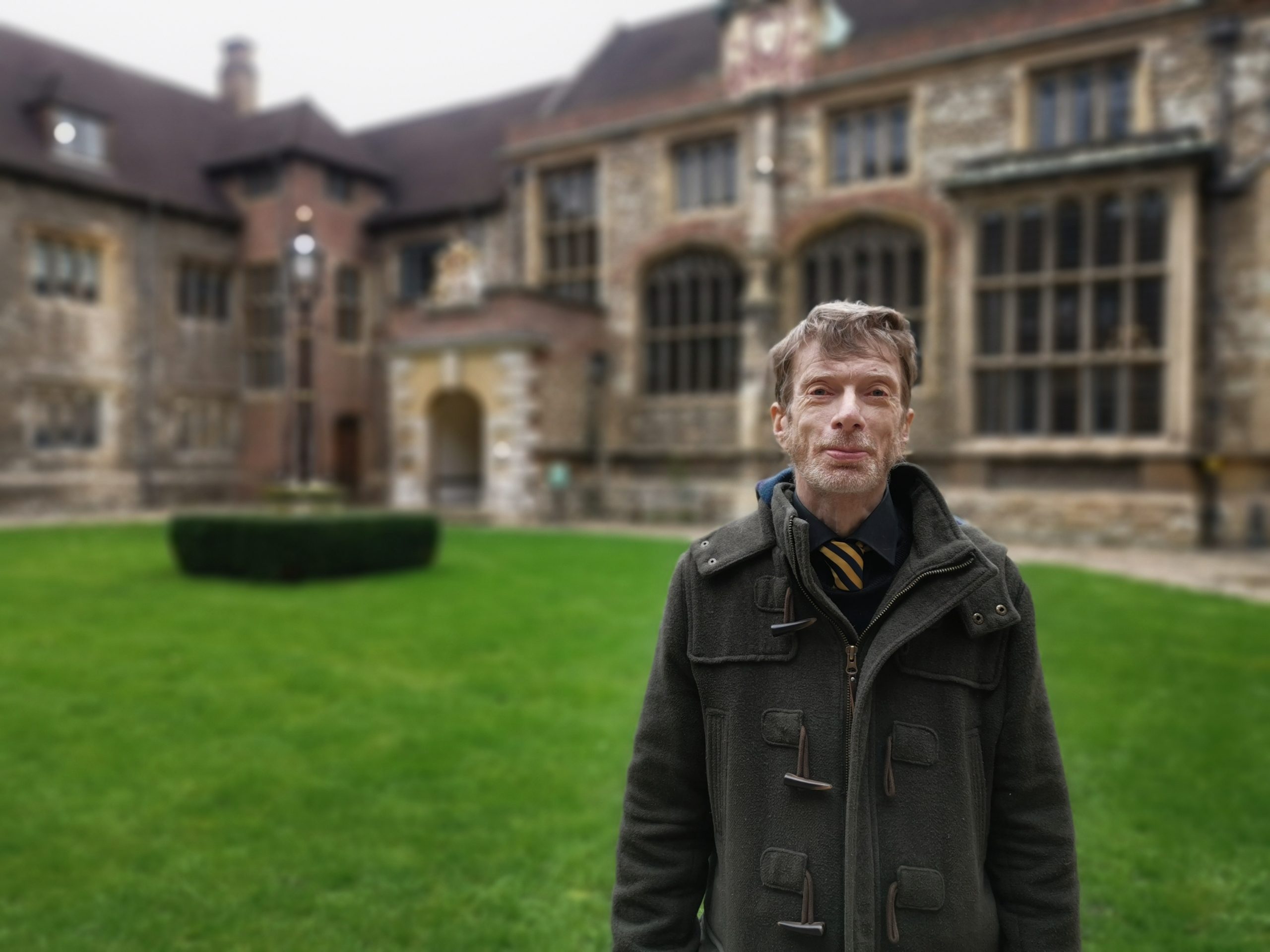
Brother Brian Reeve at Charterhouse: “If you have retired and are alone in the world, the almshouse is basically like a very grand old people’s home paid for by a 17th century charity set up by the richest man at the time to care for 40 elderly gentlemen who’d fallen on hard times.”(c) © Miko Malkowski Charterhouse
“It’s basically like a very grand old people’s home caring for 40 elderly people who have fallen on hard times,” says Brian Reeve, 73, who moved into the almshouse at Charterhouse at the end of 2016. He’s now one of the Brothers.
FOLLOW ISLINGTON FACES a new interview is published every week. Everyone has an energy story series will start this spring.
“Brother doesn’t mean we are monks any longer, it’s a courtesy title,” says Brother Brian Reeve over Zoom. “You used to have to be a man, but that’s gone by the board – three Brothers are women and we’re now welcoming applications from potential Brothers of both sexes. You do have to have given service and you can’t have too much money. There are quite a few ex-teachers here, retired actors and seven retired clergymen. The Charterhouse used to be Catholic, then a Protestant foundation, then Anglican and now has no religious qualification at all although you must be respectful of its Christian traditions. We still have our own Chaplain, and she, by the way is a lady, as is the Master.”
Brian Reeve was born and brought up in Tottenham so of course is a Spurs fan. But before moving into the Charterhouse, EC1 he’d lived in Islington before – near Highbury Corner. He’s also travelled widely: “I studied Russian at university and then finished up being a Russian interpreter. I started at the end of 1970s when Communism still held sway, then it all collapsed. When I retired, I kept on using my Russian and went not only to Russia, but to those other countries, such as Ukraine, Uzbekistan, and so on, where they still use Russian as a second language.”
It’s thanks to Brian’s passion for books and biographies of classic writers that he knew about the Charterhouse and the opportunity to live in the almshouse.
“I do a lot of reading – Dickens, Jane Austen, Thackeray, who wrote Vanity Fair. Some of Thackeray’s novels are semi-autobiographical and he describes his school that was on this site as the Slaughterhouse. He didn’t like Charterhouse at all! The school was here because when Thomas Sutton set up this charity for elderly gentlemen in 1611, he also set up a foundation for 40 schoolboys who otherwise wouldn’t get an education. It was so successful that they started charging for it. In the end they charged more and more, and there were 400 boys. So, in 1871 the school left and set up Charterhouse public school in Surrey. I’m also very fond of Vaughan Williams’s music, and he was also a pupil at Charterhouse.”
In typical understatement, Brian recalls that the selection interview, was: “Fairly intensive – I had to come here for a whole day and go round with Brothers and members of staff. We can have 3 meals a day together and have lot of activities in common, so all the other Brothers want to know if the new Brother can fit in or will they be a loose cannon. Once they are given the OK they are then interviewed formally by the Master, the Clerk to the Brothers and some of the governors (except the four who normally only come on ceremonial occasions – The Queen, The Duke of Edinburgh, Prince Charles and the Archbishop of Canterbury). Since I’ve been here, I’ve met The Queen and the Archbishop of Canterbury. But the governors’ work is mostly done by 16 high powered under-governors who’ve been something great or good in the City and in other walks of life. Each governor is given responsibility for a couple of Brothers to make sure we’re OK. My governor has been very good.”
Brian’s extremely pleased to be in this new historic home in the south of Islington. “Apart from any other consideration there is an infirmary here and they do promise to look after you until you die. I was dreading finishing up in a local authority nursing home.”
More importantly the ready-made-community at the Charterhouse means Brian isn’t lonely and there are plenty of lively conversations.
“I’m from a very working-class background, so it has really expanded my horizons,” he says referring not just to the chat, but his role running tours of the Charterhouse which will start again in May 2021. “Almost as soon as I came here, the Museum Manager said, ’You seem able-bodied, would you like to train to be a guide and talk about the life of a Brother?’ I did and I recommend it.”
For any Islington Faces fan it is definitely worth checking out the Brothers’ tours when they re-open in May. “There was an enormous amount of damage during the last war, so it’s not quite pristine. Even now we have to get English Heritage to decide how to restore the next bit, so there’s always a lot of fundraising that needs to be done.”
====================
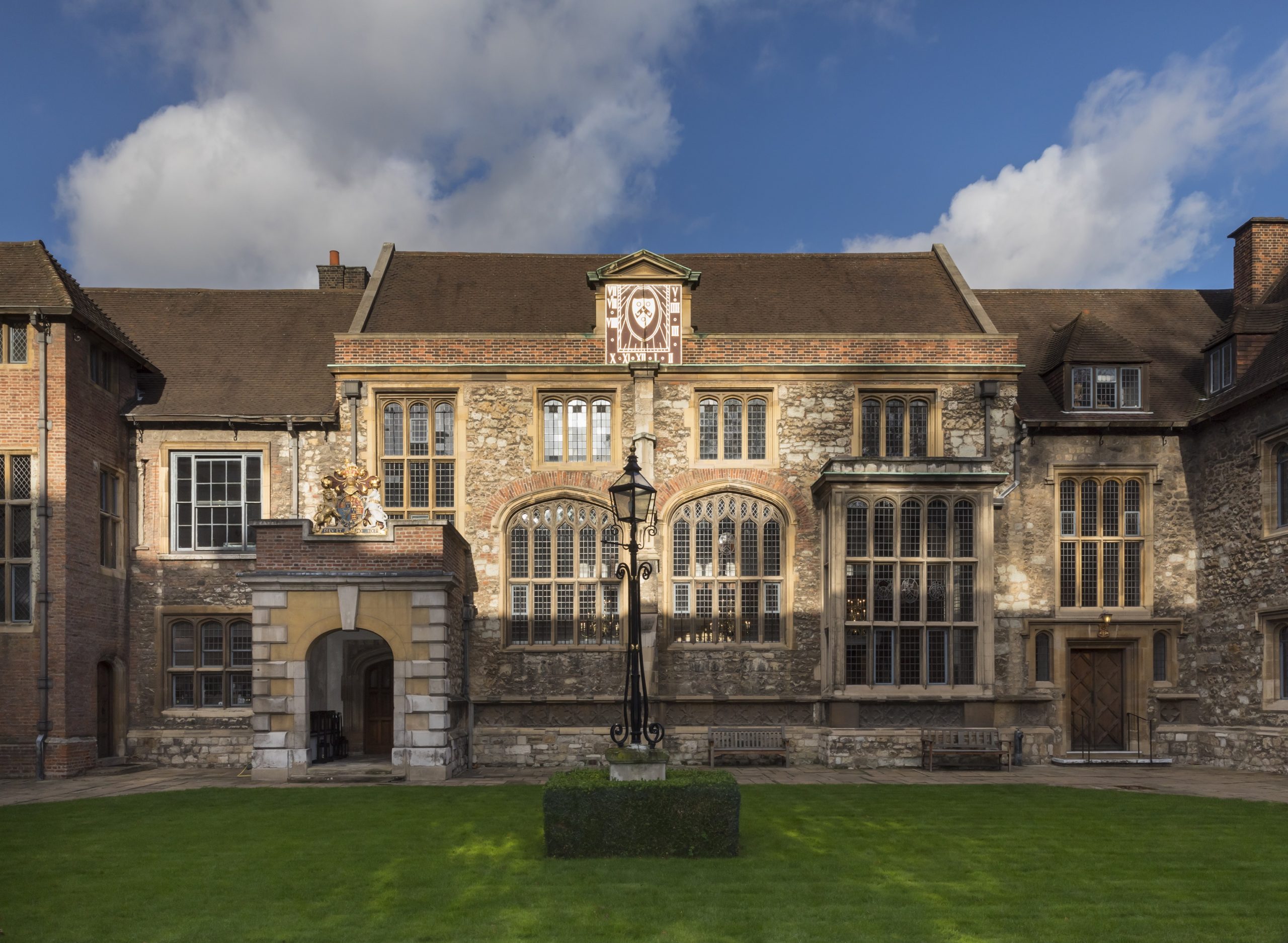
Charterhouse Master’s Court in EC1 is part of a complex of buildings where Brother Brian Reeve lives: “We’re all waiting for our 2nd vaccination, but right now we’re off limits to outsiders because of Covid-19 but when the Charterhouse is open again come on a tour. Mine take 2 hours because there’s so much to see and you must see inside, it’s bigger than you think. We have availability for more Brothers of both sexes at the moment. We’re trying to reach out into the community so more people come in to use our facilities.” (c) the Charterhouse
Places Brian Reeve likes in Islington
- Charterhouse Square which is outside the walls, and which we can walk around. It’s next to Smithfield.
- Inside the Charterhouse is a very large ornamental garden which is maintained by professional gardeners. There are foxes and lots of birds, it’s almost like a protected zone – though we’re only 10 minutes from St Paul’s. The old monastic walls keep sound out.
- A walk around Highbury Fields and Barnsbury – green places to relax. I also used to like walking down Upper Street and going to the shopping centres – Chapel Market and Angel.
- A couple of 100 yards from the Charterhouse there’s Clerkenwell Green where Marx and Lenin used to go the pub and there’s the Marx Memorial library, though I’ve never been there. It’s also near to the Museum of the Order of St John.
- I normally do a lot of walking to get some exercise. I also walk to the British Library a lot.
================
Ready to welcome everyone back
Thanks to Covid-19, 2020 saw Charterhouse close its gates.
“I used to be so busy taking tours around and meeting staff and volunteers from other galleries and museums,” says Brian. “Now it feels extremely odd as during the first-lockdown, the virus did get in here, and we did have a couple of fatalities, so now we’re very strictly separating Brothers who don’t want to go out and be exposed – they eat communally. The other Brothers are allowed to go out and may do a little bit of shopping for some of the Brothers who stay in. I’ve just got a new battery for one Brother’s wristwatch.”
“Everyone knuckles down to it, there’s almost a wartime feel to it. I’m not lonely, but I’ve just tried to make myself useful as have the younger, able-bodied Brothers – we’re making a contribution in this dreadful world. We are now just waiting for the whole pandemic situation to change and welcome everyone back,” he says.
Islington Faces is so looking forward to going on a tour of the Charterhouse with Brian – but that will have to wait until after Easter when the building opens again. Until then Brian remains stoical and busy running errands. ”You cannot let yourself get depressed otherwise you’d go mad. Some of the Brothers who were locked up here in first lockdown said that if it wasn’t for the big gardens they would have gone mad, at least they could walk around the beautiful gardens. You’ve got to keep on keeping on. I just feel very lucky to have this security and also the stimulating conversations.”
You can read about more people connected with the Charterhouse including Brother Mike Lawlor here and in our next interview (Feb 2021).
- Public tours are due to open at the beginning of May (do book a support ticket in advance), see https://thecharterhouse.org/visit-us/
- For a chance to live in the almshouse at Charterhouse please contact Clerk to the Brothers, Hannah Crane. See all the information here, https://thecharterhouse.org/joining-the-community/almshouse/
Over to you
If you’d like to nominate someone to be interviewed who grew up, lives or works in Islington, or suggest yourself, please let me know, via nicolabaird dot green at gmail dot com. If you enjoyed this post you might like to look at the A-Z index, or search by interviewee’s roles or Meet Islingtonians to find friends, neighbours and inspiration. Thanks for stopping by. Nicola